Co-ownership
Syndic software: buildings, co-owners and the general meeting
A management package for the accounts, and a portal where co-owners find their documents, reports and meetings, in the languages they read.
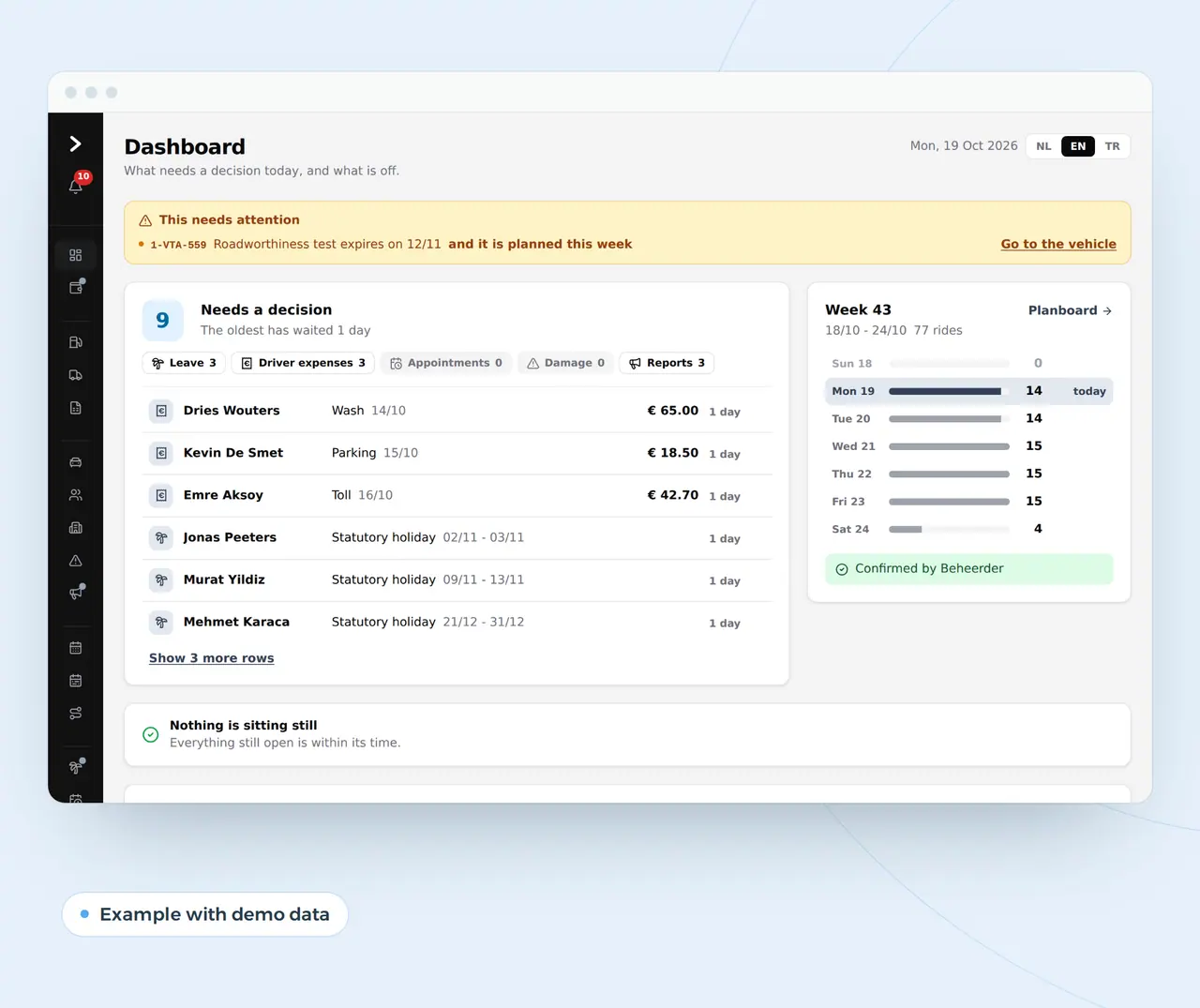
A syndic manages a year that repeats itself
Syndic software is usually a management package for the accounts of the association of co-owners and the distribution keys, with a portal on top where co-owners find their documents and report damage. The package calculates. The portal answers the questions that would otherwise reach your phone.
Every building runs a year that repeats itself: calls for the working capital and the reserve fund, the annual accounts, the general meeting with its minutes, inspections, maintenance contracts and the insurance. In between come reports of a leaking roof, a broken lift or a neighbour asking why the accounts are higher this year. In Brussels, Antwerp, Ghent and at the coast, more and more of those neighbours are expats and foreign owners who read English or French more easily than Dutch.
Honest up front: VBS has no syndic as a client. What we did build, and what works the same way, is a platform with files, documents, a log and a portal with a magic link. On this page you read what Belgian law asks of a syndic, what a package does, what a portal per building adds, how to serve co-owners in several languages and what it returns.
A building's year, and what the portal shows
January
Call for working capital and reserve fund, first quarter
The portal showsThe amount per unit, the account and what is still open
March
Annual accounts by distribution key
The portal showsThe accounts per unit and the documents behind them
April
Notice of the general meeting, with the agenda
The portal showsThe agenda, the attachments and who gave a proxy
May
General meeting
The portal showsAttendance, the votes prepared per agenda item
June
Minutes to the co-owners
The portal showsThe minutes, with what was decided and who carries it out
All year
Lift inspection, maintenance, damage reports
The portal showsReports with photo and the state of the follow-up
On a sale
Information for the notary
The portal showsThe unit's file ready as a download
Renewal date
Fire insurance of the building
The portal showsThe policy and who to call for damage
An example year of a building that holds its general meeting in May; the law asks for at least one meeting a year, in the period the bylaws of the co-ownership set.
What Belgian apartment law asks of a syndic
Belgian apartment law sits in book 3 of the Civil Code. For the software these duties matter most; the legal explanation per building comes from a lawyer or the professional body.
| Duty | What it asks | What the software does |
|---|---|---|
| General meeting | At least once a year, in the period the bylaws set | The notice with agenda and attachments, attendance, proxies, the votes per item |
| Minutes | Drawn up by the syndic and sent to the co-owners | Minutes per meeting in the portal, with the decisions and who carries them out |
| Working capital and reserve fund | A reserve fund with a legal minimum, unless the meeting decides otherwise | Calls per unit by distribution key, with what is still open |
| Distribution keys | Splitting costs by the shares or keys in the deed of division | The accounts per unit, with the documents behind them |
| Information on a sale | Data on the unit for the notary, such as arrears and decided works | The unit's file as a download, ready the day the notary asks |
| Keeping records | Keeping the building's documents and making them available | An archive per building, with who saw what |
A professional syndic is registered with the BIV, the Belgian institute of real estate professionals, and follows its code of conduct; what that asks, you check there. Software cannot take a decision the meeting has to take, but it can make sure every decision can be found with its documents.
Package or portal: what each does
The management packages for syndics do the arithmetic well: accounts per association, distribution keys, calls, annual accounts and payments. They usually charge per unit or per building per year. Where they differ is what the co-owner gets to see.
- A package without a portalsends the accounts as a PDF by email. Every question about them lands with you.
- A package with a standard portalshows documents and balances, in the supplier's look, usually without reports with photos or preparation of the meeting.
- A portal of your own next to your packageshows per building what you want, in your own style: documents, reports with photo and follow-up, the agenda and attachments of the meeting, proxies and the minutes. It reads from your package through an integration and adds what the package does not do.
What a portal is and what it asks in security is under client portal; how we build one at client portal development. If invoicing to suppliers and co-owners has to run differently than your package allows, read Peppol invoicing software.
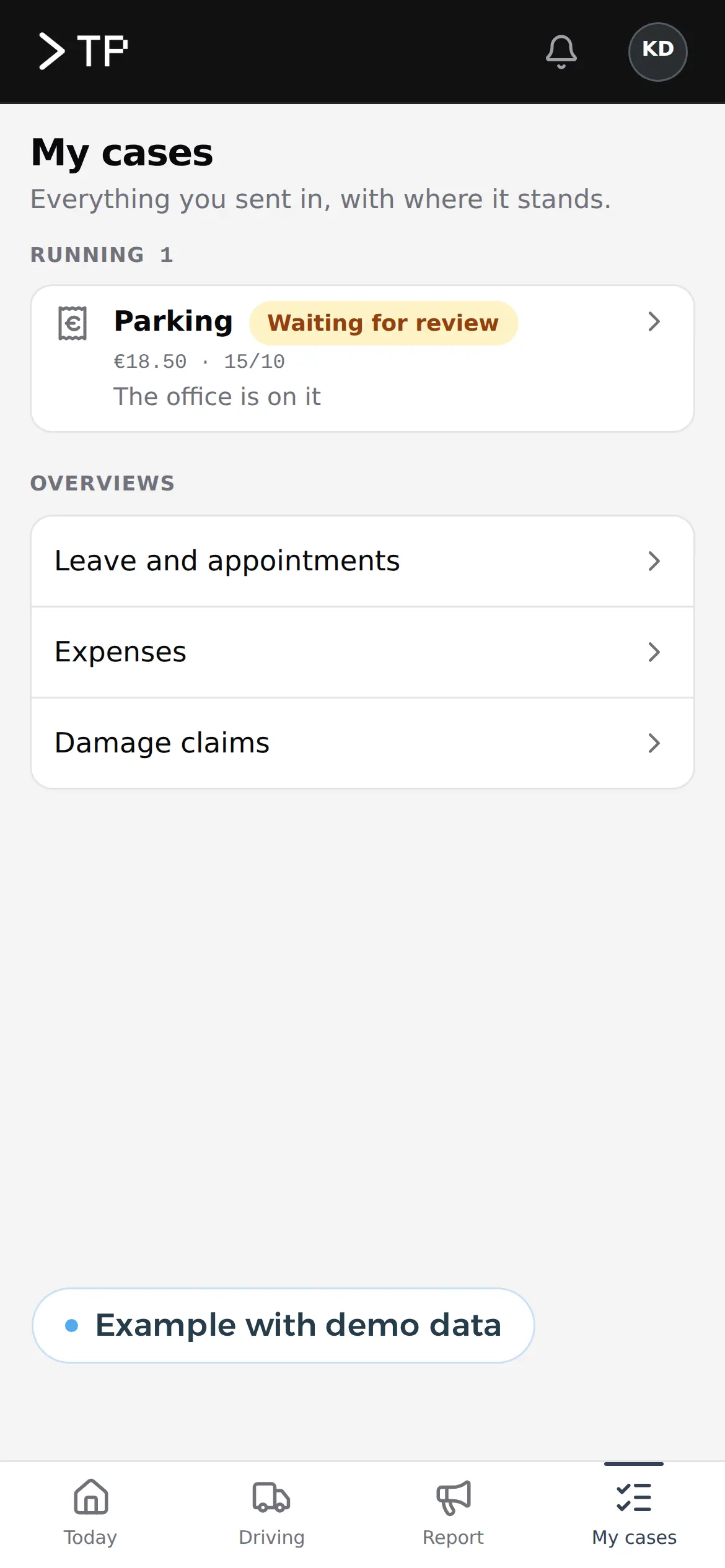
A portal we built
For Business Centrum, a payroll office in Ghent, we built a management platform with a portal for their clients. A client logs in with a magic link by email and sees their own data, documents and hours. Behind the portal sit files, a log of who did what, two-factor authentication per user and encryption of sensitive data.
Replace client with co-owner and file with unit, and you have the building blocks of a portal for a syndic. What comes on top are the distribution keys from your package, the reports with photos and the preparation of the meeting.
How such a platform replaces a spreadsheet is in replace Excel with software.
Co-owners who read another language
A building in Brussels or at the coast can have owners from five countries. Many live abroad and own the flat as an investment or a second home; they cannot drop by the office and do not read Dutch or French with ease. For a syndic that means more emails, more calls about the same question, and proxies that arrive too late.
| What the co-owner needs | Official language | What the portal adds |
|---|---|---|
| The notice and the agenda of the meeting | the language of the association | a short English summary per agenda item, checked by the office |
| The minutes | the language of the association | the decisions in a list, with an English line next to each |
| The annual accounts | the language of the association | labels and explanations in the reader's language |
| A damage report | any language | a form in Dutch, French and English, with a photo |
| Contact for urgent damage | any language | the number and the hours, in every language of the portal |
The documents that count legally stay in the language of the association; the portal makes them readable. A portal in several languages works like a multilingual website: one set of data, one version per language, and the reader picks.
What co-owners ask, and where the answer sits
Most calls to a syndic are about a handful of questions. Almost every answer already sits somewhere: in the package, in an email or in a folder on the server. A portal puts it where the co-owner looks.
| Question from a co-owner | Where the answer sits today | Where it sits in a portal |
|---|---|---|
| Why are my accounts higher than last year? | In the package, behind the distribution keys | The accounts per unit, with the invoices and the key |
| When will the roof be repaired? | In emails with the contractor | The report with its state, the quote and the planned date |
| What was decided at the last meeting? | In a PDF in a mailbox | The minutes, with per decision who carries it out |
| Have I paid my advance? | In the accounts | The unit's balance, with the open calls |
| What do I give the notary when I sell? | With the syndic, on request | The unit's file as a download, and a pointer to the syndic for the official information |
What the portal does not show stays with the syndic: a question that needs a decision, a conflict between neighbours, an explanation of a decision of the meeting. There a portal only helps by keeping those questions from disappearing among a hundred others. An assistant that sorts questions and prepares a reply works like AI customer service. If you work with spreadsheets per building today, read Excel scheduling or planning software; a system of your own for your office is on custom software. And because you keep names, addresses and payments of co-owners, you need a privacy policy; see do I need a privacy policy.
What a portal per building returns
The meeting comes on top. A notice with attachments that co-owners open online, proxies that come in digitally and minutes that are ready the day after the meeting save hours per building per year in printing, post and calls. And a report with photo, location and follow-up saves the back and forth with the contractor.
What a portal costs depends on what it must read from your package. Belgian agencies charge 50 to 150 euros an hour on the market; a portal with login, documents per unit and reports quickly takes 150 to 300 hours, the integration with your package included. VBS works with a fixed price per project after a first conversation. A list of what your portal must do you set up with a software requirements template.
A portal for co-owners shows
- Per building the deed of division, the bylaws and the insurance policy
- Per unit the annual accounts, the calls and what is still open
- The agenda and attachments of the next meeting, with a proxy to fill in
- The minutes of every meeting, with the decisions and their follow-up
- Reports with photo and location, and the state of the follow-up
- Contact details for urgent damage outside office hours, in every language of the portal
- Who looked at what, in a log for the office
Next to the syndic: estate agent and notary
A building also touches the sale of its units. What an estate agent needs in software for properties, candidates and certificates is on real estate CRM. On every sale the notary asks the syndic for information; how notaries use AI for their files is on AI for notaries. If you want an assistant to answer co-owners from the bylaws and minutes of their own building, read custom ChatGPT for business. And if you want your syndic office to be found by associations looking for a new syndic, it starts with a small business website with a page per town where you manage buildings, and an English page for the foreign owners who increasingly sit on those boards.
Client portal
How VBS helps you with this
We build a portal where your clients sign in, see their file and handle what they can themselves: fewer emails, less retyping.
- Sign-in with a link by email, no password
- Documents, appointments and status per client
- Linked to your own back office
How we approach it is on our page about Client portal.
A portal for your buildings?
Tell us which management package you use, how many buildings and units you manage and which questions come in most. After a conversation you get a proposal for the portal and a fixed price.
Rather get in touch right away?