Shopify store setup
Shopify agency for stores selling across Europe
Local payments, VAT and OSS, a language per market and the legal pages, set up before your first order.
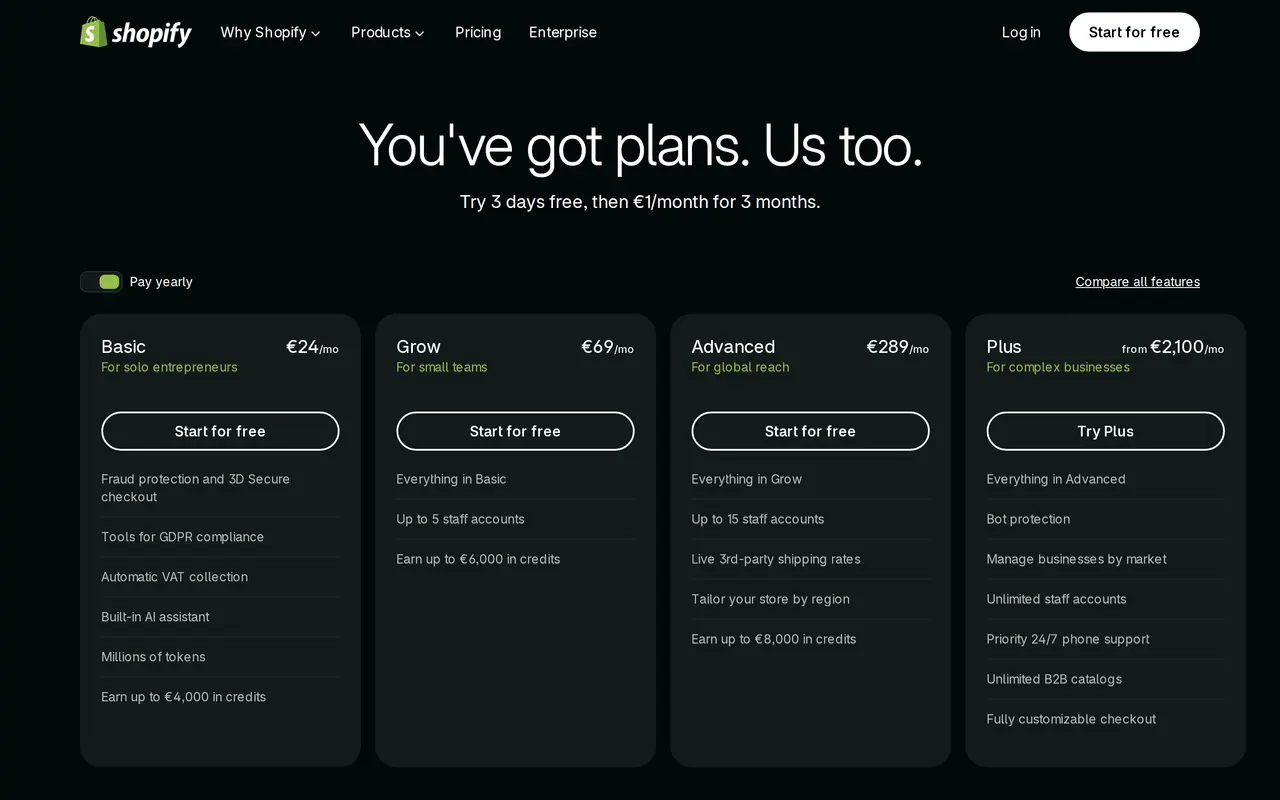
A store that sells in more than one country
A Shopify agency that works for EU stores sets up four things a theme leaves open: the payment methods people use in each country, VAT and the One Stop Shop once you sell across borders, a language and a market per country, and the legal pages consumers are owed. The theme is the easy part.
A shopper in Amsterdam pays with iDEAL, one in Antwerp with Bancontact, one in Lyon by card. Each expects prices in euro with their own VAT, a site in their language and a clear way to return a parcel within 14 days. Get one of those wrong and the order stops at checkout.
We are a studio in Ghent, Belgium, and we build sites in four and five languages for clients who sell beyond one market. Below: what we set up per market, how a delivery runs in three phases, a cost example at 200 and 1,000 orders a month, and when we would advise against Shopify. For the price alone, read what a Shopify store costs.
What changes per market
Shopify Markets lets one store sell to several countries with its own language, currency and prices per market. The settings behind it are where most stores lose orders. This is what we check for each market you add.
| Market | How people pay | What we set up |
|---|---|---|
| Netherlands | iDEAL first, then cards | iDEAL at the top of checkout (0.29 euro per payment on Shopify Payments), Dutch, prices including Dutch VAT |
| Belgium | Bancontact, cards, Apple Pay | Bancontact (0.39 euro per payment), Dutch and French with hreflang, a company number in the footer |
| France, Germany, the rest of the EU | Cards and wallets | Language per market, local shipping rates, VAT of the customer's country once you pass the OSS threshold |
| Outside the euro | Cards in the local currency | Prices rounded per market rather than converted live, since Shopify Payments charges 2 percent to convert currencies |
The EU threshold matters early. Once your sales to consumers in other EU countries pass 10,000 euro a year in total, you charge the VAT of each customer's country and file it through the One Stop Shop in your own country. We set the tax settings so Shopify charges the right rate; which rate applies to which product is a decision for your accountant. How Google shows the right language to the right shopper is explained in hreflang, and the wider build in multilingual website development.
Shopify, WooCommerce or custom, and the delivery
Three questions, one platform
Does the customer build the product, with a price that depends on sizes or options?
No: question 2Must every order flow into your ERP, planning or accounts, with rules no app covers?
No: question 3Do you already run a WordPress site with a lot of content you want to keep?
Custom
The price depends on choices or sizes, or every order has to land in your own system.
WooCommerce
A WordPress site with content you keep already runs, and you want no monthly plan.
Shopify
Standard products, your team runs it, payments and shipping have to simply work.
The delivery
Weeks 1 to 2
Setup
Theme, payment methods per country, VAT, shipping zones, Markets and languages
You supply: Logo, brand guide, company and VAT numbers, access to your payment account
Weeks 3 to 5
Catalogue and pages
Product import, collections, filters, legal pages per market, SEO per page
You supply: Product sheet, photos, your terms and returns policy per country
Week 6
Test and launch
Test orders per payment method and country, redirects, analytics, a one hour handover
You supply: One test order with your own card and a sign off
Example for a small to mid-sized store with up to 300 products; a bigger range or an integration makes phase 2 longer.
When we advise against Shopify
A Shopify-only agency will not tell you this. These are the cases where we propose something else, and the case where Shopify is right.
- Choose WooCommerce ifyou already run a WordPress site with content that ranks, you want no monthly plan and someone on your side keeps the plugins up to date. The trade-off is in Shopify or WooCommerce, the real cost in is WooCommerce free.
- Choose custom ifyour customer builds the product and the price follows from sizes, options or distance. Then you need a product configurator that turns choices into an order or a quote, with or without Shopify as the checkout behind it.
- Choose custom too ifevery order must land in your own planning, stock or accounts with rules no app knows. That starts with an API integration.
- Choose Shopify ifyou sell standard products, your team wants to run the store itself, and payments, shipping and VAT should simply work.
If data residency or a European vendor is a requirement, compare the options in Shopify alternatives in Europe. If you also sell in a shop, Shopify or Lightspeed helps you pick a till that fits.
The monthly bill at 200 and 1,000 orders
Take a store in the Netherlands with orders of 60 euro: 70 percent paid with iDEAL, 30 percent by card, all through Shopify Payments, on the yearly plan, with two paid apps for reviews and shipping labels at about 49 euro together. Prices exclude VAT.
| Per month | 200 orders, Basic | 1,000 orders, Basic | 1,000 orders, Grow |
|---|---|---|---|
| Plan | 24 euro | 24 euro | 69 euro |
| iDEAL, 0.29 euro per payment | 40.60 euro | 203 euro | 203 euro |
| Card, 2% or 1.8% plus 0.25 euro | 87 euro | 435 euro | 399 euro |
| Apps | 49 euro | 49 euro | 49 euro |
| Total | 200.60 euro | 711 euro | 720 euro |
| Per order | 1.00 euro | 0.71 euro | 0.72 euro |
At 1,000 orders Basic is still the cheaper plan. Grow takes 0.2 percent off card payments, which only covers its extra 45 euro a month from about 22,500 euro of card sales a month. You move up a plan for staff accounts and reports, not to save on fees. In Belgium the same store pays 0.39 euro per Bancontact payment instead, which adds about 14 euro a month at 200 orders.
The build is a one-off on top. Agency builds in our market run from about 4,000 to 15,000 euro and more, depending on products, languages and integrations; what an ecommerce website costs explains the range. We quote a fixed price per project after a first call, split by phase; our approach is on webshop development.
One store, two volumes, two plans
- Plan
- iDEAL
- Card
- Apps
200.6 euro
a month
200 orders
Basic
1 euro per order
711 euro
a month
1,000 orders
Basic
0.71 euro per order
720 euro
a month
1,000 orders
Grow
0.72 euro per order
Worked example excluding VAT: orders of 60 euro, 70 percent paid with iDEAL and 30 percent by card through Shopify Payments, yearly plan, two paid apps.
Work that sells the way a store does
We have no live VBS web store to show today. We do have work that takes a visitor to an order or a request with a price and a total, in English as well.
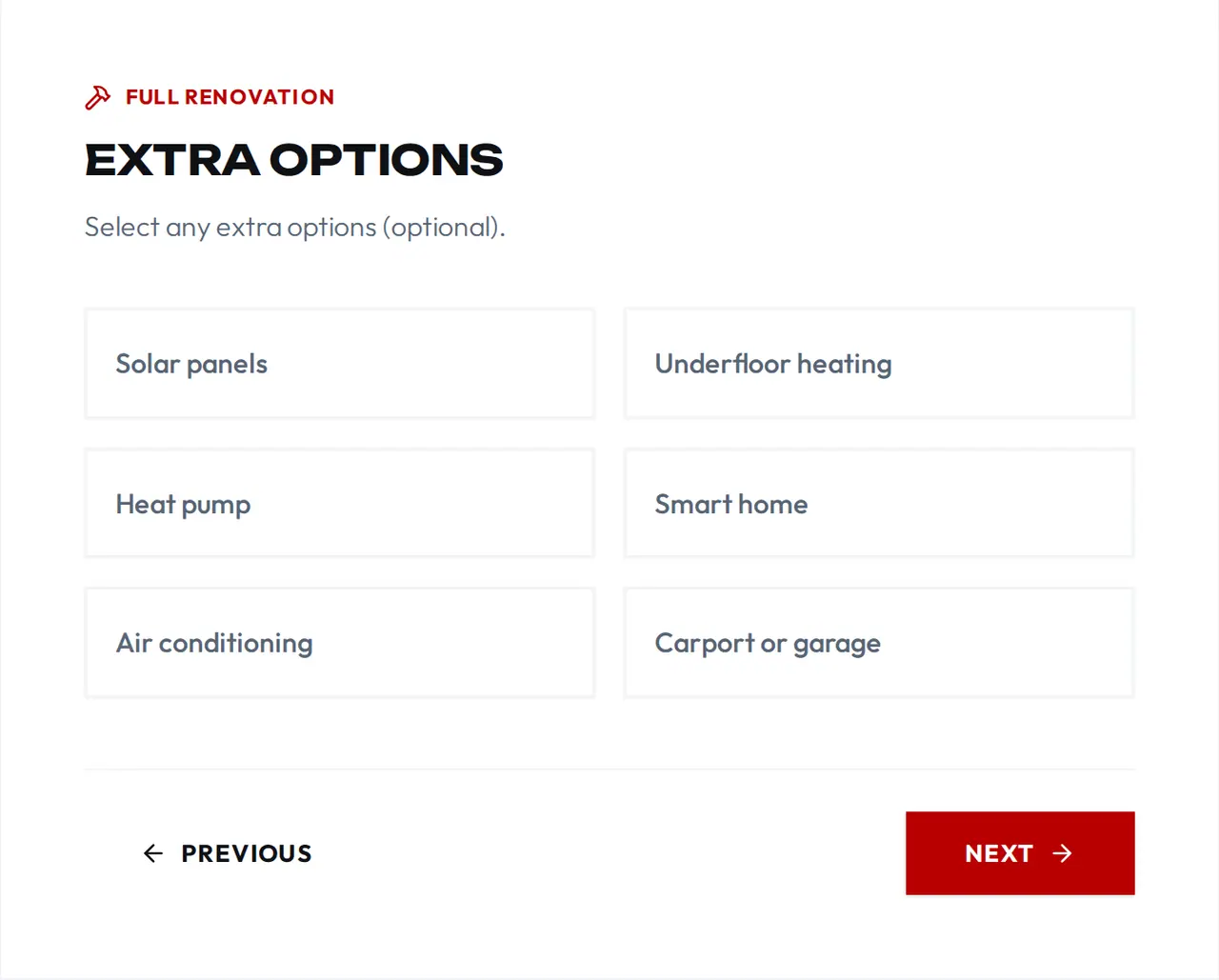
Build it, see the price
The cost calculator for SN Group: pick a project, the floor area and a finish, and get a price range. It is the page on that site with the most impressions on searches without the brand name.
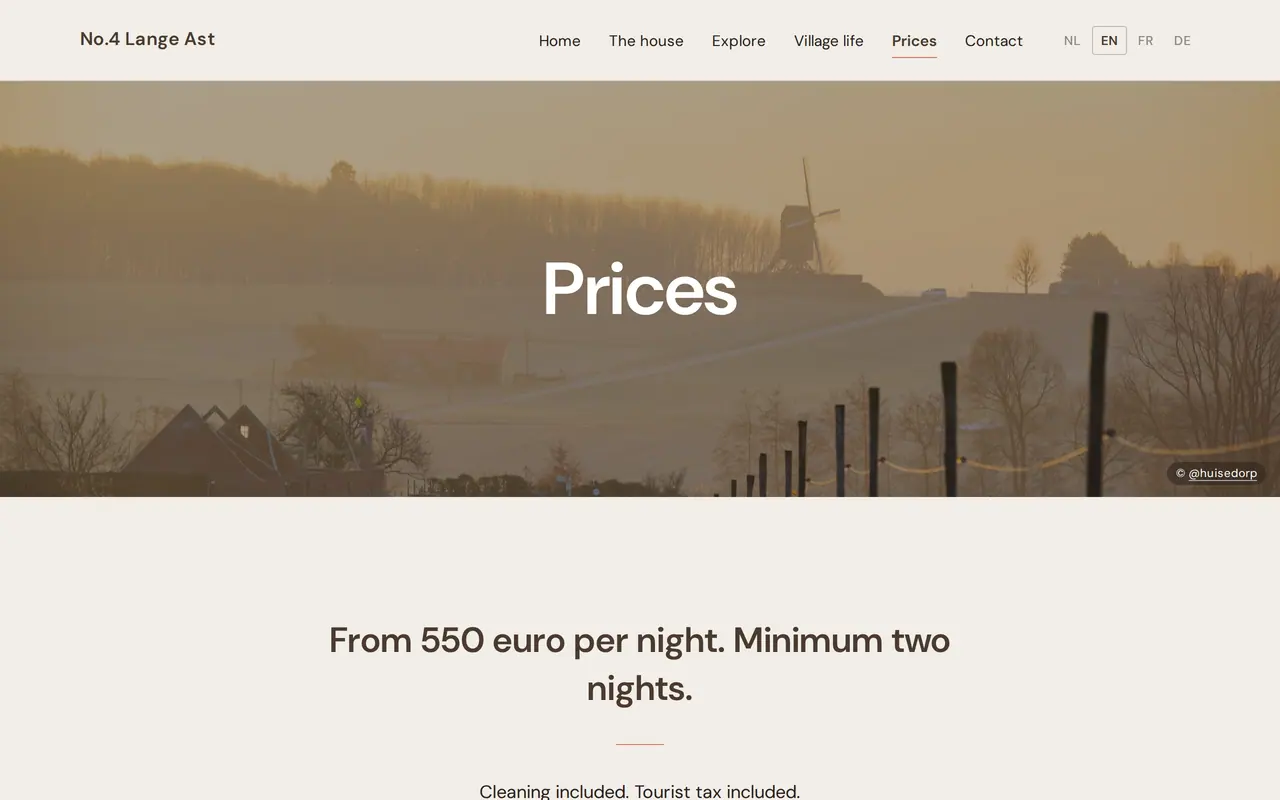
Dates, prices and a request
At No.4 Lange Ast a guest picks free dates from the Airbnb and Booking calendars and sends a request, without commission.
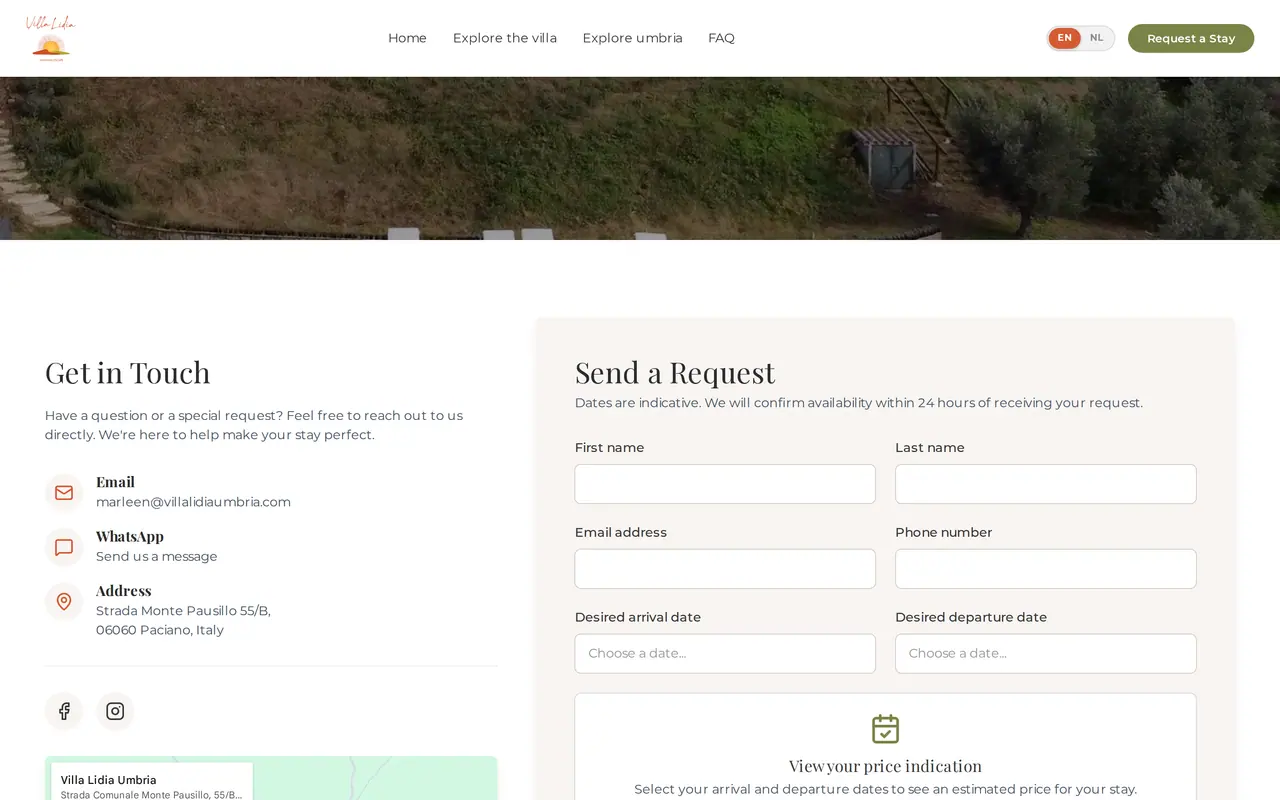
Booking in two languages
The availability calendar and booking form of Villa Lidia, a villa in Umbria that sells to guests from across Europe.

Tools that pull in visitors
Four calculators at Business Centrum, on a site that went from 220 to 10,200 impressions a day in five weeks.
Before the store goes live, per market
- A test order with every payment method of that market, refunded afterwards
- VAT shown including tax at the right rate, and the VAT number on the invoice
- Shipping rates per zone and a free shipping threshold that still leaves margin
- Terms, privacy notice and returns page in the language of the market, reviewed by a lawyer
- The 14-day right of withdrawal with a form, and the withdrawal button EU law requires from 19 June 2026
- Company name, address and company number visible on every page
- Contrast, keyboard use and alt texts in line with the European Accessibility Act
- A cookie choice that really chooses, before any ad or analytics pixel loads
- A 301 from every old product address if you move from another platform
- Titles and descriptions per product and collection in each language, and a sitemap Google can read
The rules your customer sees
Most of the checklist is law, not taste. Consumers in the EU can withdraw from an online purchase within 14 days without giving a reason, and from 19 June 2026 the store has to offer a clear button to do so. Web stores fall under the European Accessibility Act since 28 June 2025, with an exemption for micro-enterprises; the European Accessibility Act for websites has the detail. Whether you need a cookie banner depends on what you load, see do I need a cookie banner, and which company details belong on the site is in company number on your website.
We write the pages and place them; a lawyer in your country signs off on the wording. Once the store is live, traffic decides how fast it pays back, so phase 2 already writes every product page for the terms buyers type: ecommerce SEO shows how. And if Shopify itself is the question, is Shopify free lists what you pay for and what stays free.
Webshop development
How VBS helps you with this
We build the steps where your buyer chooses and sees the cost at once: a calculator, a configurator or a booking with the total on screen, and behind it the checkout that suits your business.
- A calculator or configurator with the price on screen
- A checkout with the local payment methods and guest checkout, or a request with the total
- Tracked to the order or the enquiry
How we approach it is on our page about Webshop development.
Planning a Shopify store for more than one country?
Send us your product sheet, the countries you sell to and the languages you need. After a call you get a fixed price per phase and a timeline. Or read how we approach webshop development.
Rather get in touch right away?