On this page
Airbnb and Booking.com side by side for a host
What you give up per booking and how it works, on 24 October 2026.
- What you pay
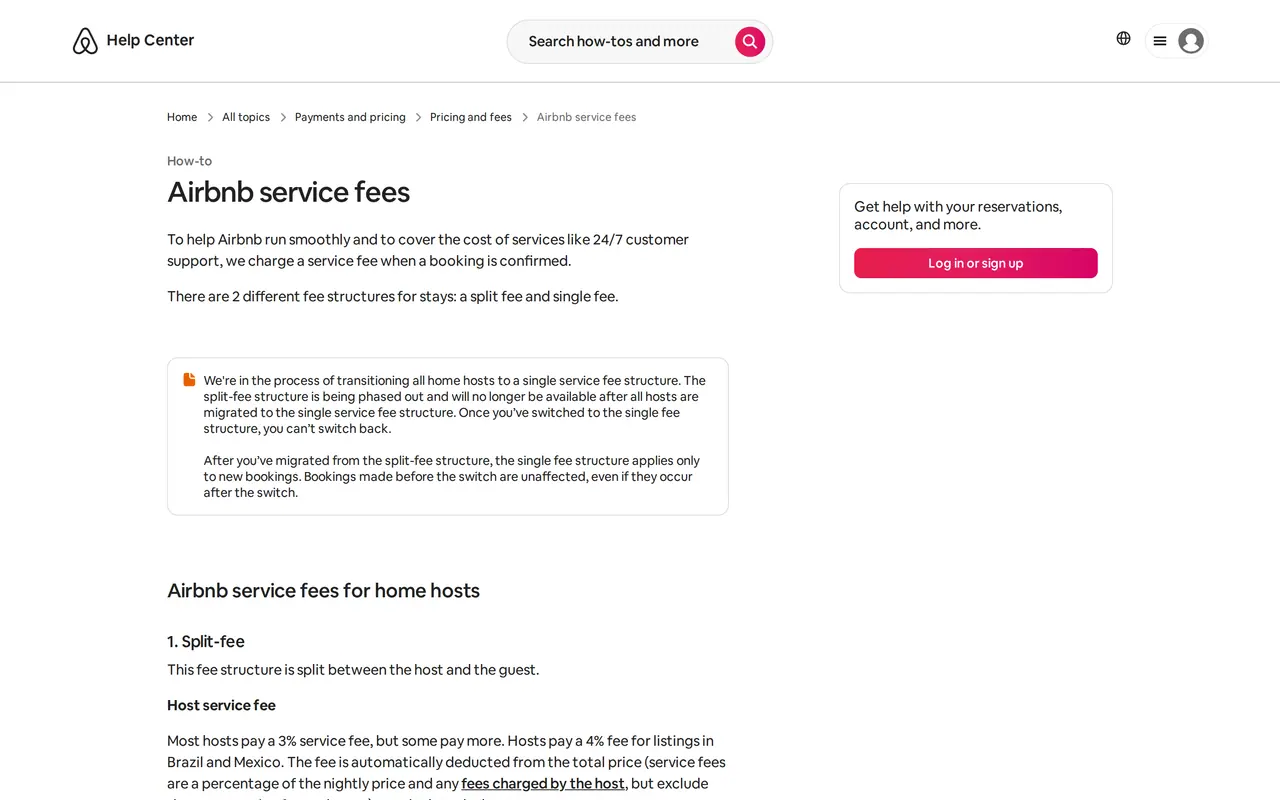
- Airbnbservice fee: usually 15.5 percent on the single-fee structure, 14 to 16 percent for other hosts
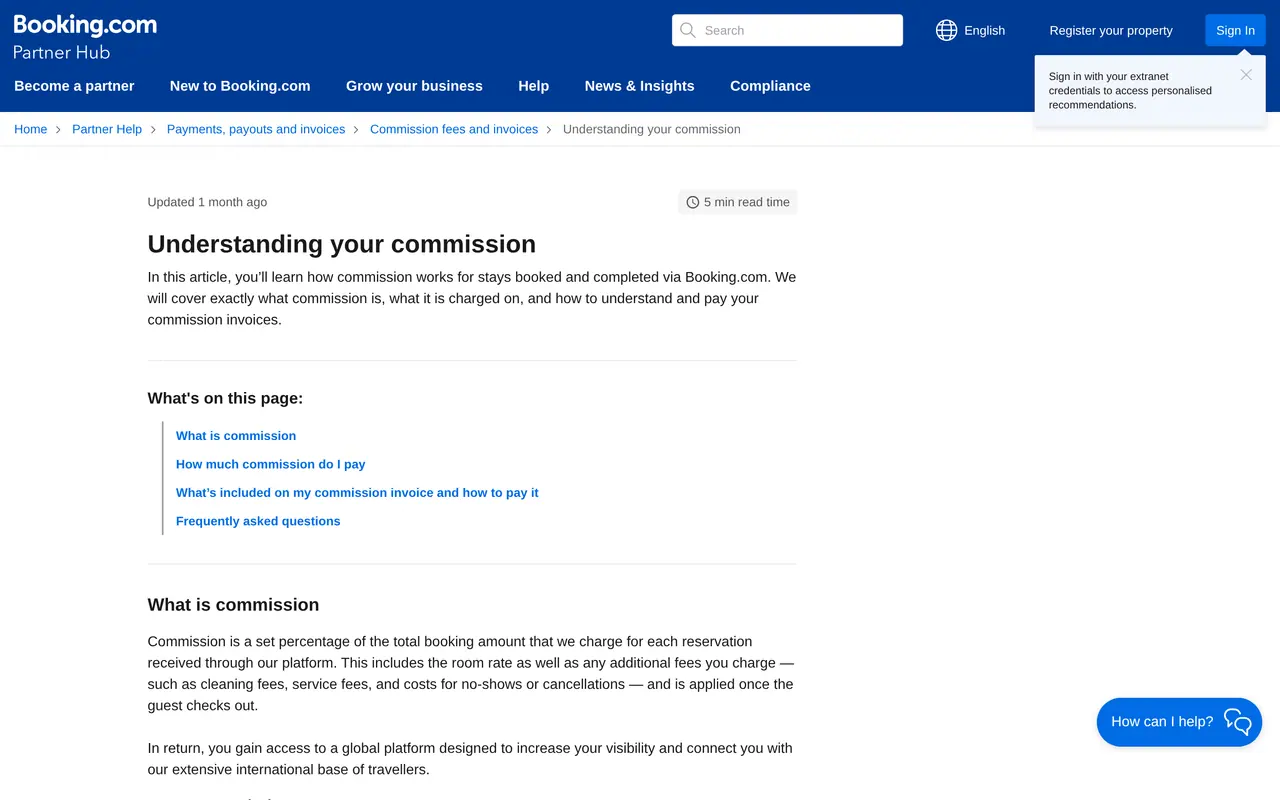
- Booking.comcommission: a percentage from your agreement, depending on country and property type
- On what
- Airbnbthe nightly price plus your own fees such as cleaning, excluding taxes
- Booking.comthe full amount: room rate plus extras such as cleaning and no-show charges
- When
- Airbnbdeducted from your payout
- Booking.comone invoice a month for stays that ended last month, or settled automatically
- What pushes it up
- Airbnbthe split model is going; once you switch you cannot go back
- Booking.comprogrammes such as Preferred Partner or Visibility Booster
- Watch out
- Airbnbhosts using property management software must use the single fee
- Booking.commark no-shows and cancellations within 48 hours of check-out, or pay full commission
In money the gap is small. Airbnb is more predictable per booking; Booking.com depends on your agreement and the programmes you join.
Airbnb vs Booking.com for hosts comes down to what you keep: on Airbnb most hosts pay a 15.5 percent service fee taken from the payout, and on Booking.com you pay a commission set in your agreement that often lands in the same range. The bigger differences are what the fee is charged on, how you pay it, and which guests each platform brings.
This comparison sets the costs side by side using one week's stay as a worked example, explains the rules that cost money if you miss them, and shows what a direct booking site adds. What a holiday home website needs is covered in direct booking website.
What Airbnb charges hosts
Airbnb has two fee structures. On the split fee the host usually pays 3 percent and the guest a service fee of 14.1 to 16.5 percent on top. On the single fee the host pays everything: usually 15.5 percent, 14 to 16 percent for some hosts, deducted from the payout. Airbnb is moving all home hosts to the single fee; once you switch you cannot switch back. Hosts using property management software and hotels are already on it. Where VAT applies, it is included in the fee.
For you that means: your Airbnb price is what the guest sees, and you keep about 84.5 percent of it. If you priced for the split model, revisit your rates when you move.
What Booking.com charges hosts
Booking.com charges commission: a set percentage of the total booking amount, room rate plus extras such as cleaning fees, and also charges for no-shows or cancellations. The percentage depends on your country, your property type and the agreement you signed; it is in your agreement or in the extranet. If you join a programme such as Preferred Partner or Visibility Booster, the percentage goes up.
You get one invoice a month for every stay that ended in the previous month. With Payments by Booking.com the commission is often settled automatically from your payouts. One rule that costs money if missed: mark no-shows, cancellations and changes in the extranet within 48 hours of check-out, or you pay full commission on the original booking.
What you keep from a 1,500 euro week
Airbnb, 15.5 percent1,267.50 you keep
channel: 232.50
Booking.com, 15 percent assumed1,275.00 you keep
channel: 225.00
Direct, payment provider1,472.75 you keep
channel: 27.25
How we worked it out
One week at 200 euro a night plus 100 euro cleaning is 1,500 euro. Airbnb at 15.5 percent: 232.50 euro, you keep 1,267.50. Booking.com at an assumed 15 percent: 225 euro, you keep 1,275. Direct through your own site, paid with a European consumer card through Mollie at 1.8 percent plus 0.25 euro: 27.25 euro, you keep 1,472.75.
What a season costs in fees
| A season of 20 weeks like the one above | Airbnb | Booking.com, 15 percent | Direct |
|---|---|---|---|
| Revenue | 30,000 euro | 30,000 euro | 30,000 euro |
| Channel cost | 4,650 euro | 4,500 euro | 545 euro in payment fees |
| What you keep | 25,350 euro | 25,500 euro | 29,455 euro |
Nobody fills a whole season direct: the platforms bring guests you would never reach yourself. But every returning guest who books direct saves you around 200 euro a week in this example. That is why most hosts combine the platforms with a site of their own.
Airbnb and Booking together, without double bookings
Listing on both means keeping one calendar. Both support iCal: a link with your booked dates that you import into the other platform. It works, with two caveats. An iCal calendar is fetched periodically, not instantly, so two bookings for the same night shortly after each other remain possible. And prices and conditions do not sync; you manage those per platform. Hosts with many bookings use a channel manager; hosts with a few properties manage with iCal and their own calendar. How a booking system for your website handles this is on that page.
When a direct booking site pays for itself
In the worked example above you save about 200 euro in fees for every week booked direct. A simple site with a calendar and a request form can be built from 1,500 euro; hosting and a domain name come on top.
| Direct weeks a year | Saved a year | Who they are |
|---|---|---|
| 4 | about 800 euro | a few returning guests |
| 8 | about 1,600 euro | returning guests and people who look up your name after a stay |
| 15 | about 3,000 euro | a steady group of guests booking direct |
Our own worked example at 200 euro saved per week. With eight direct weeks a year, a 1,500 euro site has paid for itself in the first year. The saving only exists if guests find your site: put the link in your confirmation emails, on a card in the house and on your social media.
What we built for hosts
For Villa Lidia, a villa with a pool in Umbria, Italy, we built a site in English and Dutch with a booking request form, an availability calendar and a small admin panel. See the Villa Lidia case.
For No.4 Lange Ast, a holiday house for eight in Flanders, Belgium, we built a site in four languages with an availability calendar that pulls in the iCal feeds from Airbnb and Booking, and a form for direct requests. Guests see free dates on the house's own site, and returning guests book without commission. See the No.4 Lange Ast case.
A site of your own only brings bookings when guests find it: mostly returning guests, guests who look up your name after a platform stay, and guests searching for your region. From Ghent, Belgium, we build these sites for hosts across Europe; see website design.
Checks for choosing or combining platforms
- Which Airbnb fee structure are you on, and what does the move to the single fee mean for your prices?
- What commission rate is in your Booking.com agreement, and are you in a programme that raises it?
- Do you mark no-shows and cancellations on Booking.com within 48 hours of check-out?
- Are your calendars linked between platforms, and how often do they refresh?
- Can returning guests book or enquire with you directly?
- Do you know the short-term rental rules in your town and region?
Hosting on Airbnb, Booking.com or direct
Is Airbnb or Booking.com better for hosts?
In cost the gap is small: usually 15.5 percent on Airbnb against the commission in your Booking.com agreement. Airbnb draws more guests looking for a distinctive stay, Booking.com many international travellers. Most hosts use both.
How much does Airbnb charge hosts?
On the single fee usually 15.5 percent, 14 to 16 percent for some hosts. On the old split fee 3 percent for the host plus a guest service fee; that model is being phased out.
How much commission does Booking.com take?
A percentage depending on your country, property type and agreement. It is in your agreement or extranet; programmes such as Preferred Partner raise it.
Can I list on Airbnb and Booking.com at the same time?
Yes. Link the calendars with iCal or a channel manager so a booking on one platform blocks the dates on the other.
Does a direct booking site pay off?
For returning guests and people who search your name, yes: direct you only pay your payment provider. In our example that saves around 200 euro a week.