Belgium is two markets with one border.
A website in French and Dutch is the baseline for selling to consumers or businesses across Belgium. Flanders searches and buys in Dutch, Wallonia in French, and Brussels in both, often with English alongside; the Dutch of Flanders is not that of the Netherlands either, as Dutch vs Flemish shows. Google recommends a separate URL per language, a visible language switch, no automatic redirects based on the browser, and hreflang to tie the versions together. And each language needs its own search terms: a buyer in Liège does not type the translation of what a buyer in Ghent types.
We have built sites in Dutch, French, English, Turkish and German from Ghent. This article is for companies outside Belgium, or outside one of its language regions, that want to sell there: which languages you need, how to structure URLs, translation versus rewriting, and the mistakes that cost the most.
Local service business in Flanders
One language is enough
Customers search in Dutch, in their own region.
A strong Dutch site; add French when demand appears.
Company selling across Belgium
Dutch and French
Wallonia and Brussels search in French, with different words.
A complete French version, not just the home page.
Online store shipping in Belgium
Dutch and French
Buyers check out in their own language and search their own terms.
Product and category pages per language, with their own keywords.
Brussels business or expat market
Three or more
Customers speak French, Dutch and often English.
Three languages, with a clear language switch at the top.
Holiday rental with foreign guests
Three or more
Guests book in their own language.
Languages by where guests come from, such as English and German.
Adding a language means a full version at its own URLs, not a translate button.
The choices up front
| Choice | Options | Our advice |
|---|---|---|
| URLs | A domain per country, a subdomain per language, a folder per language, a parameter | A folder per language (/nl/, /fr/) on one domain |
| Language switch | Automatic on the browser, or chosen by the visitor | A visible switch, never automatic redirects |
| Page names | The same in every language, or translated | Translated: /fr/services/ beats /fr/diensten/ |
| Content | Translated or rewritten | Rewrite what sells, translate what is fixed |
| Connection | Hreflang, a sitemap per language | Both, and a link to the other languages on every page |
Google lays the URL options side by side. A country domain (such as .be) signals the country clearly but is costly and heavy to run, and limited to one country. A subdomain (fr.yoursite.com) is easy but ambiguous: does fr mean the language or France? A folder (yoursite.com/fr/) is simple and cheap on one host, which is why it suits most companies. URL parameters (?lang=fr) Google advises against. If you already run a .com for several countries, adding /nl-be/ and /fr-be/ folders keeps Belgium within one site. What else a foreign seller settles in Belgium, from Bancontact to the sales periods, is in selling online in Belgium.
What Google asks
Three rules from Google's guidelines make the difference. One: every language version has its own URL, and the language never depends on a cookie or browser setting. Two: do not redirect visitors automatically to the language you guess; put a clear switch on the page. Three: connect the versions with hreflang so Google shows the right language in results. Google judges the visible text, not a language code in the markup, so a page with a French title and Dutch body stays Dutch to Google.
Adding French and Dutch, in order
- Pick languages from your customersWhere do enquiries come from, and in which language do they write?
- Research keywords per languageEach language its own terms, from Autocomplete set to Belgium.
- Build the URLsA folder per language, such as /fr/ and /nl/, with translated page names.
- Write, then have it readBy a native speaker who knows your field and Belgian usage.
- Connect and measureHreflang, a sitemap per language, Search Console per language.
Which languages you really need
Start from your customers, not from a map. A B2B company selling to large Belgian firms can often add English for buyers in Brussels; a consumer brand needs Dutch and French, full stop. For Business Centrum, a payroll office in Ghent, we built a site in Dutch, French, English and Turkish, because their clients speak those languages. At launch each language had 174 URLs; by October Dutch and French each had 395 in the sitemap.
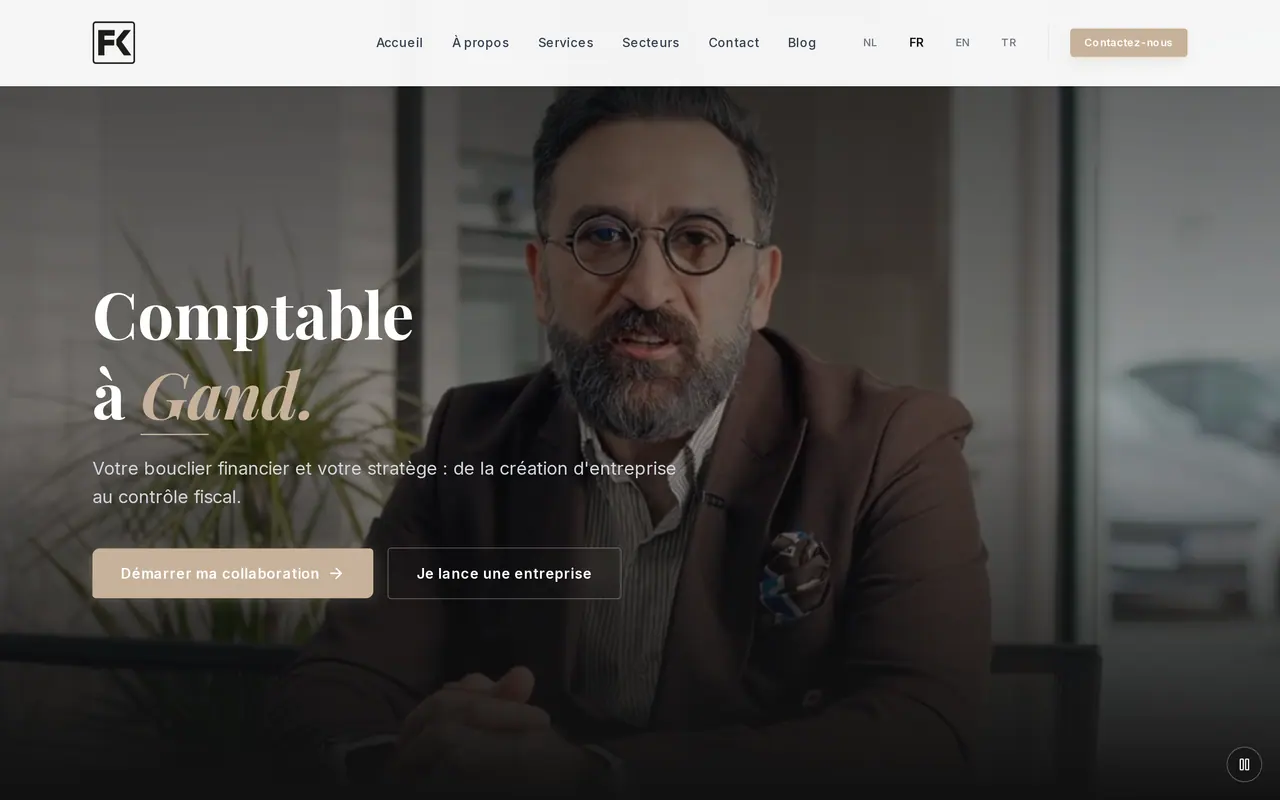
For FK Boekhouding and K&A Law we also worked in four languages. For No.4 Lange Ast, a holiday house in Flanders, German became the fourth language next to Dutch, English and French, with an availability calendar and a request form in each. And Villa Lidia in Umbria runs in English and Dutch for its guests.
Keywords per language
The biggest gap between a translated site and a good one is in search terms. A Flemish employer searches "sociaal secretariaat", a Walloon one "secrétariat social", but the questions behind them differ too: other rules, other cities, other words for the same need. Run your own keyword research per language, with Autocomplete set to Belgium. Only then write. Titles, meta descriptions and headings are written again per language too, on the term people search in that language; a translated title often just misses it.
Watch Belgian usage as well. Dutch in Flanders differs from Dutch in the Netherlands ("gsm" for a mobile phone, "btw" for VAT, "zaakvoerder" for a managing director), and French in Belgium has its own terms. Copy written for Amsterdam or Paris reads foreign in Ghent or Namur.
Belgian rules that follow the language
Selling to Belgian consumers brings Belgian rules with it, whatever language your site is in. Sales periods and discount rules apply to online shops selling to Belgians; see Belgium's sales period 2027. EU consumer law applies in every language you sell in, including the withdrawal button and accessibility rules. Your terms, privacy policy and checkout belong in each language your customers buy in.
What it costs
A second language costs more than the translation. Budget for research per language, rewriting the key pages, native proofreading and upkeep: every new page arrives in every language. General website prices are in web developer hourly rate; for online stores, see Shopify cost.
What it means for your business
A company from abroad starts with Dutch and French and writes for the Belgian reader, not the Dutch or French one. A Flemish small business with local customers starts with a strong Dutch site and adds French when demand appears. An online store shipping across Belgium needs French for product and category pages, checkout and terms. An agency building sites in several languages plans the research per language from the quote onwards.
Translating against rewriting
- Search terms
- Literal translationThe translation of your English terms
- Rewriting per languageThe terms Belgian buyers type in that language
- Examples
- Literal translationThe same as in your home market
- Rewriting per languageBelgian cities, rules and habits
- Cost
- Literal translationLower
- Rewriting per languageHigher, but the page works
- When
- Literal translationLegal texts, terms and conditions
- Rewriting per languageServices, guides, home page
Translate what is fixed, rewrite what has to sell.
Mistakes we see most
- Automatic redirectsA Fleming with a French-language browser never reaches the Dutch version. Google advises against it.
- Half translationsA French home page with Dutch service pages. Visitors leave; Google sees a messy site.
- Untranslated page names/fr/diensten/ means nothing to a French speaker.
- No hreflangGoogle then sometimes shows the wrong language in results.
- Images without translated alt textGoogle advises translating file names of localised images too.
Adding languages to an existing site
Making an existing site multilingual often changes every URL, for example from /services/ to /en/services/. That is a migration: without redirects you lose rankings. Read website migration and SEO first, then measure per language in Search Console; see how to use Google Search Console.
How VBS builds your site in two languages
From Ghent, Belgium, we do multilingual website development for companies entering Belgium and Europe: sites in the languages of your customers, with their own URLs and search terms per language, native-read copy and hreflang. We have built sites in five languages: Dutch, French, English, Turkish and German. See also our website design service. Book a call.