On this page
Build vs buy software comes down to two cost curves: a subscription costs little to start and grows with every user and every year, a build costs a lot at the start and then grows only with upkeep. Buy when your process works like everyone else's. Build when the process is what sets you apart, when no package is made for it, or when your team is large enough that per-seat prices outrun what a build costs to own.
Custom software vs SaaS pricing, read the same way
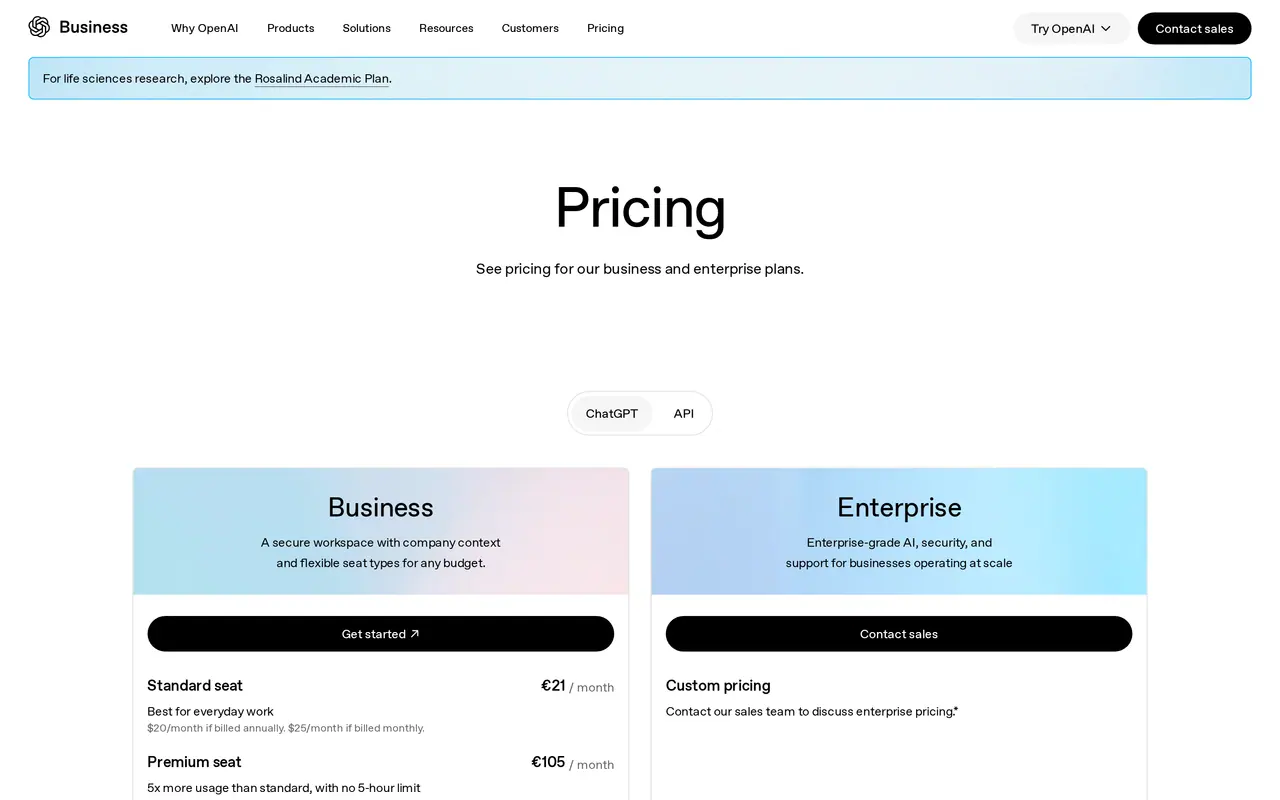
SaaS prices are public, so start there. October 2026 prices:
| Package | Price per month | Per user over five years |
|---|---|---|
| Odoo Custom (Studio, multi-company, external API) | 35.90 euro per user per month billed yearly in year one, then 44.90 | 2,586 euro |
| Odoo Standard | 19.90 euro in year one, then 24.90 | 1,434 euro |
| monday.com Pro | 19 euro per seat per month, billed annually | 1,140 euro |
| HubSpot Sales Hub Professional | from 90 dollars per seat per month, plus 1,500 dollars onboarding | 5,400 dollars plus onboarding |
Multiply by people and months and the picture changes. Thirty users on Odoo Custom cost 77,580 euro over five years, before any partner sets it up. A build has no seat price; it costs its development plus upkeep: hosting, security updates and the changes you ask for. So the useful question is not what a build costs, but how much it may cost before the subscription is cheaper.
The chart below shows it for 10, 30 and 60 users, with upkeep at a fifth of the build per year. That assumption decides everything: a build that costs X and then a fifth of X every year costs 2X over five years, so it may cost at most half the five-year seat bill. This is how the ceiling moves when upkeep turns out lighter or heavier:
| Upkeep per year | 10 users | 30 users | 60 users |
|---|---|---|---|
| A tenth of the build | 17,240 | 51,720 | 103,440 |
| A fifth of the build | 12,930 | 38,790 | 77,580 |
| Three tenths of the build | 10,344 | 31,032 | 62,064 |
Amounts in euro: the most a build may cost to stay below five years of Odoo Custom. Ask any builder for their own upkeep estimate and find your row. What custom software costs to build depends on scope; what Odoo costs including implementation is in Odoo pricing.
Make vs buy software in our own projects
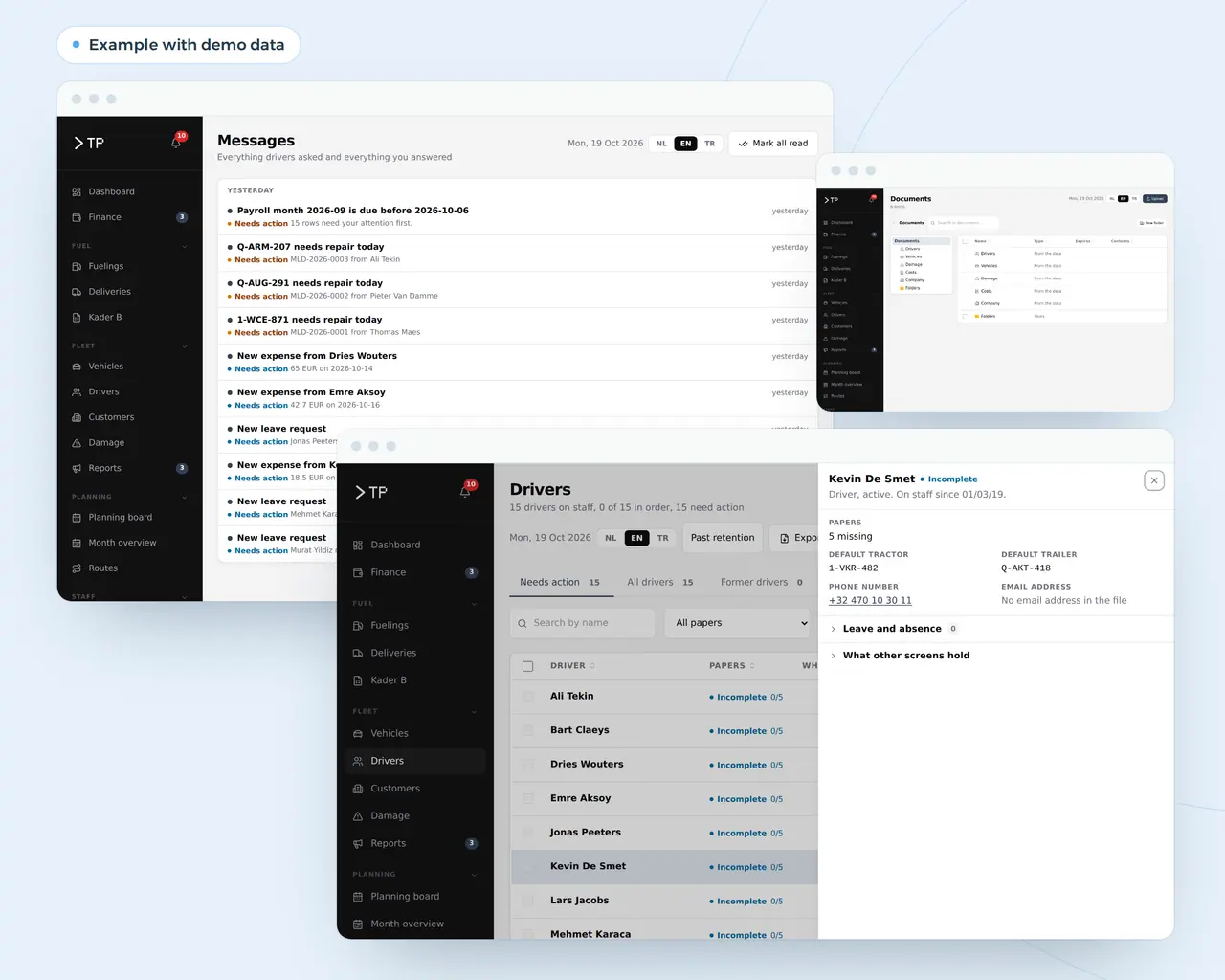
The clearest case for building is a process with rules of its own. For DA Logistics, a Belgian transport company, we built a platform around fuel under the Belgian Kader B regime for professional diesel: stock kept first in, first out, a correction log and a discrepancy report for customs, next to a weekly planning board, the fleet files and a driver app in three languages. Around thirty drivers and 34 vehicles run on it every day.
Building also changes the cost of the next user, or the next company. Zuco Logistics, a second transport company, went live on the same core on 14 September 2026, with its own profile, server and depot model for fuel: domain, certificate and app in 57 minutes. For Business Centrum, a payroll and HR office in Ghent, the build replaces the Excel files the team worked in, with portals for their clients.
The opposite holds as well. For bookkeeping, mail or a plain sales pipeline, a package is cheaper and better maintained than anything you would build. What we build connects to those packages where that saves time.
How much a build may cost next to five years of seats
35.90 euro per user per month in year one, then 44.90, billed yearly: 2,586 euro per user over five years
- Five years of subscription
- What the build may cost
10 users
- What the build may cost
- 12,930 euro
- Five years of subscription
- 25,860 euro
30 users
- What the build may cost
- 38,790 euro
- Five years of subscription
- 77,580 euro
60 users
- What the build may cost
- 77,580 euro
- Five years of subscription
- 155,160 euro
Our own worked example at October 2026 prices. Assumption: upkeep costs a fifth of the build every year, so five years cost twice the build. Setup and data migration are left out on both sides.
Custom software vs off the shelf, line by line
- Cost at the start
- BuildHigh: analysis, design, development, testing
- BuyLow: a trial, then the first month
- Cost over five years
- BuildGrows with upkeep and new features, not with users
- BuyGrows with every user, every year, and with price changes
- Fit with your process
- BuildMade for it, including the odd rules of your sector
- BuyYou adapt to the package, or pay for customisation inside it
- Who decides what comes next
- BuildYou
- BuyThe vendor's roadmap
- Your data and integrations
- BuildIn your database, connected the way you choose
- BuyIn the vendor's cloud, through the connectors and API it offers
- Time to first use
- BuildWeeks to months, depending on scope
- BuyDays
- Leaving
- BuildYou own the code; another team can take it over
- BuyExport what the vendor lets you export, then migrate
Buy what is standard, build what is yours. The bill tips toward building when the team is large or the process is one no package is made for.
Signs that buying no longer fits
- Your team keeps a spreadsheet next to the package to do what it cannot.
- You pay for seats of people who only need one screen.
- A rule of your sector or country has no place in the package.
- Your data sits in three tools that do not talk to each other.
- The next price change or plan change would hurt your margin.
- The process the package forces on you is slower than your own.
- You would sell the way you work to others, as a platform of your own.
The costs nobody puts in the proposal
When you buy: implementation by a partner, often per day; extra modules or add-ons per month; the spreadsheet your team keeps next to the package; the hours spent on workarounds; and price or plan changes you do not control. Leaving later means exporting what the vendor allows and migrating.
When you build: the analysis before the first line of code; hosting, backups and monitoring; security and dependency updates; the changes you ask for as the business moves; and your own time to test and decide. A build without a maintenance agreement ages fast.
Put both lists next to each other with real numbers before you choose. The seat price is the easiest line to compare and rarely the one that decides.
Build, buy or both, per situation
- A service business with quotes, projects and invoicesbuy. A tool such as Teamleader or Odoo covers it; see Teamleader alternatives and Odoo alternatives.
- A company that needs CRM and ERPbuy first, and only build what does not fit; the difference is explained in CRM vs ERP.
- A transport, logistics or field-service company with its own rulesoften build, as with the transport software above.
- A business whose customers must log in to see their filesbuild the client portal, connected to the packages you keep.
- A product you would sell to othersbuild, and own it.
Who builds also matters: an agency in your market, a nearshore team or freelancers. Where it pays to outsource is in best countries to outsource software development and nearshore software development.
Build or buy software, the short version
Is custom software cheaper than SaaS?
At the start, never. Over five years it can be: the larger your team and the lighter the upkeep, the more a build may cost before the subscription is cheaper. After that it is yours, with no price per user.
What is the difference between custom software and off-the-shelf software?
Custom software is made for one company's process and owned by that company. Off-the-shelf software is made for many companies, and you rent or license it on the vendor's terms.
What does the upkeep of custom software include?
Hosting, security and dependency updates, backups, monitoring, and the changes you ask for as your business moves. Ask any builder to price these per year before you sign.
Can I start with SaaS and build later?
Yes, and it is often the cheapest route: learn what you need on a package, then build the part that does not fit, with your data exported from the package.
How long does it take to build custom software?
A first working version of a focused tool takes weeks; a platform with several modules takes months. Starting with the part that costs you the most time keeps the first release small.