Software in Ghent
Software development in Ghent for the platforms companies run on
Planning, client portals and staff apps, built around how your company works, in English.

Spreadsheets work until someone is ill
Software development in Ghent, for most companies we meet, starts with a spreadsheet that grows every year, a shared folder and emails nobody finds back. That holds until someone is ill, a formula breaks or a client asks where their file is.
This page is for managers of international companies in Ghent, and for firms abroad looking for a team in Belgium. It covers who should build your software, what a team here costs next to one at home, a package against custom in numbers, the Belgian rules your software has to meet, the Flemish support that is left, and the mistakes that cost money later.
Who builds it: a team in Ghent, nearshore or a package
International companies that ask us about software usually weigh three routes. Pick on what you need to control, not only on the hourly rate:
- Choose a team in Ghent ifyour users work in Belgium, the software touches Belgian rules such as Peppol invoicing or payroll codes, or you want to sit at the same table every few weeks. Meetings, code and documentation run in English.
- Choose a nearshore team in Central Europe ifprice per hour decides and the work is well specified. In Poland labour costs less than half of what it does in Belgium; the full trade-off is in nearshore software development.
- Choose a package ifyour process works like that of thousands of other companies: accounting, a simple CRM, invoicing. Build vs buy software works out when custom pays back.
- Choose an integration ifyour packages each do their job but staff retype data between them. An automation is cheaper than a new platform; see AI automation.
What a team in Ghent costs next to one at home
| Country | Labour cost per hour in IT, 2024 | Senior freelancer per hour, 2026 |
|---|---|---|
| Belgium | 58.70 euros | not in the survey |
| Netherlands | 58.00 euros | 80 to 125 dollars |
| Germany | 57.40 euros | 85 to 140 dollars |
| Denmark | 61.50 euros | 75 to 120 dollars |
| Poland | 26.30 euros | not in the survey |
Belgium sits with Germany and the Netherlands on labour cost. Six countries side by side are in best countries to outsource software development.
A package against custom, in numbers
Odoo charges per user, with an onboarding pack in the first year. Paid yearly, everyone a user:
| Company | Year 1 with onboarding | Every year after |
|---|---|---|
| 5 people, Standard | 1,693 euros | 1,494 euros |
| 15 people, Standard | 8,257 euros | 4,482 euros |
| 40 people, Custom plan | 34,062 euros | 21,552 euros |
Every Odoo plan is in Odoo pricing; the kind of system you need in CRM vs ERP and Odoo alternatives.
Belgian rules your software meets
| Rule | What it asks of your software | Since |
|---|---|---|
| Structured e-invoices between Belgian companies | invoices sent and received over Peppol, not as PDF | 1 January 2026 |
| GDPR | a legal basis for every piece of personal data and a processing agreement with each supplier | 2018 |
| NIS2, Belgian law | a recognised security framework for companies in critical sectors | deadline April 2027 |
| Product liability for software | software treated as a product when it causes damage | December 2026 |
The general grace period for e-invoicing fines ended at the end of March 2026; details in Belgium e-invoicing penalties and e-invoicing in Belgium. More on the other two: NIS2 Belgium deadline and product liability for software.
Support in Flanders for a company with a Belgian entity
A company registered in Flanders can ask VLAIO, the Flemish agency for innovation and entrepreneurship, whether a project qualifies as innovation. Its Ghent office is at Koningin Maria Hendrikaplein 70, next to Gent-Sint-Pieters station; the general line is 0800 20 555. A development project covers 25 to 50 percent of accepted costs, with a minimum grant of 25,000 euros, for something new rather than a planning board you could buy. The SME wallet, which used to fund training and cybersecurity advice, has run out of budget for 2026 and is being phased out. The whole picture is in Flanders digitalisation grants.
Mistakes that cost money later
Where software saves time, by sector
The hours sit in a different place per trade. Hauliers lose them in planning and fuel records, which is why transport management software puts both on one board. Accounting and payroll offices lose them chasing documents from clients; see software for accounting firms. Builders and installers lose them between the site and the office, which a work order app or construction scheduling software closes. Any company with shifts can start from staff scheduling software, and one that invoices from all of it needs Peppol invoicing software.
A spreadsheet becomes a platform your company runs on
- 01Your spreadsheet and your workWe read your files and watch how your team works today: what gets typed twice, what goes wrong.
- 02A model of your dataClients, files, trips or sites as tables with rules, so nothing is stored twice or wrong.
- 03ModulesA screen per task: planning, files, stock, invoicing. Tested on your own data.
- 04Portal and appClients see their file, staff work on their phone, in their own language.
- 05Live and growingYour old file imported, a backup every night, and new modules when you need them.
For Business Centrum we tested the import on their real file with 309 employers and 971 employees.
From a first call to a live first version
- Sit with the people who do the workAt our office, at yours or on a video call, we watch how the task runs today and agree what comes first.
- A first screen on a test linkYour team clicks through its own work with its own data and corrects us before we build further.
- Your old files come alongOne import moves the spreadsheet into the platform, with a report of every row that did not come in clean.
- Live, then the next moduleYour team works in it while we add what is missing; a release never stops anyone working.
Bring these to a first call
- The task that costs your team most hours, and who does it today.
- The files and tools that hold the data now: spreadsheets, a CRM, an accounting package.
- Who will use the software: office staff, people on the road, clients.
- The languages your users work in.
- Whether you invoice Belgian companies and need Peppol.
- Who in your company decides on the first version.
Software your team opens every day
The platform screens are examples with demo data.
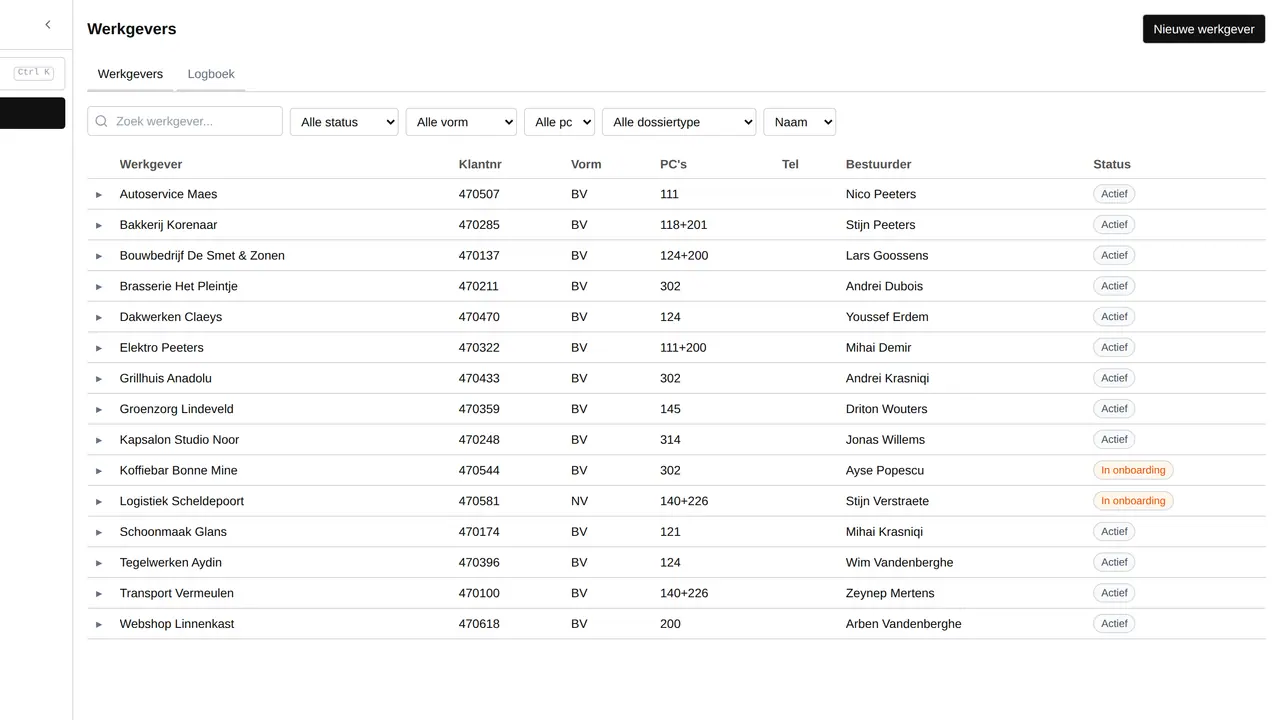
Admin tools
Files, tasks, documents and a log in one place, like the platform we built for Business Centrum in Ghent, tested on their real file of 309 employers and 971 employees.
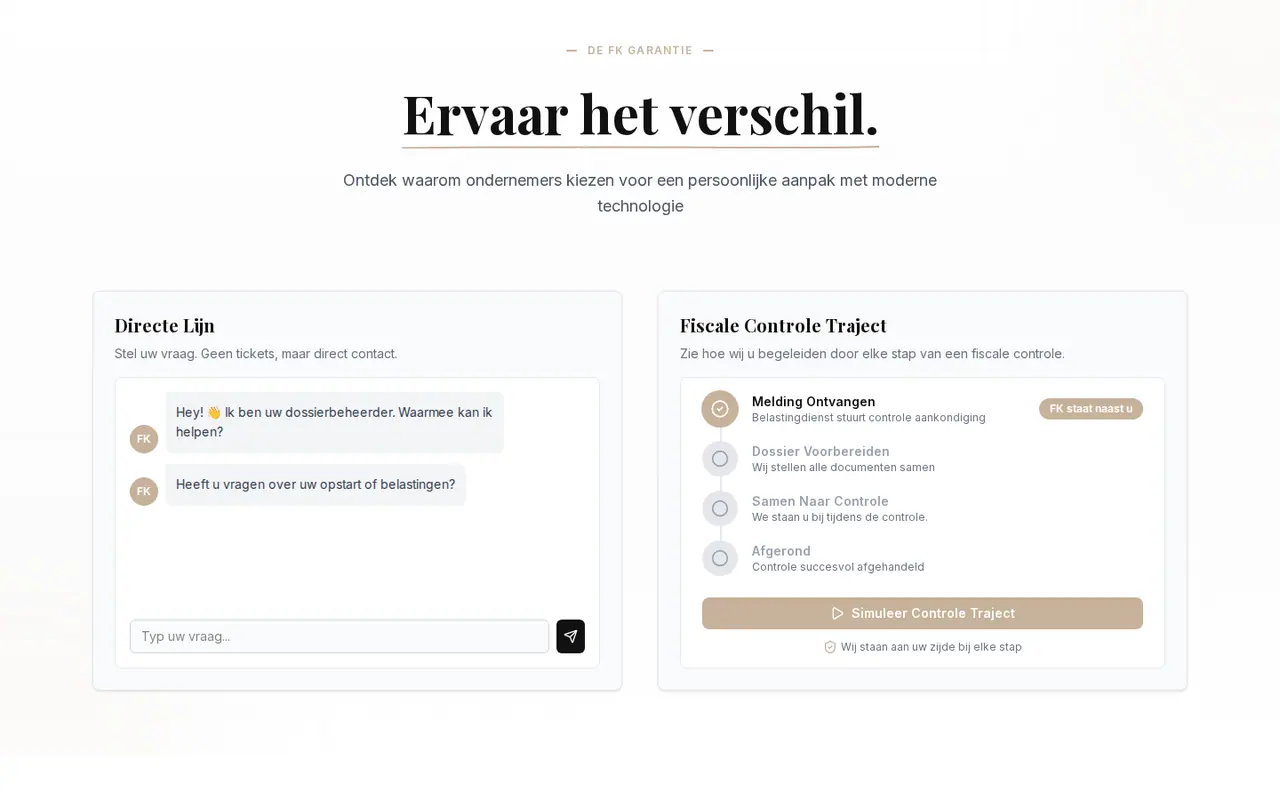
Client portals
Clients see their own data and book a meeting themselves, as at FK Boekhouding in Ghent.
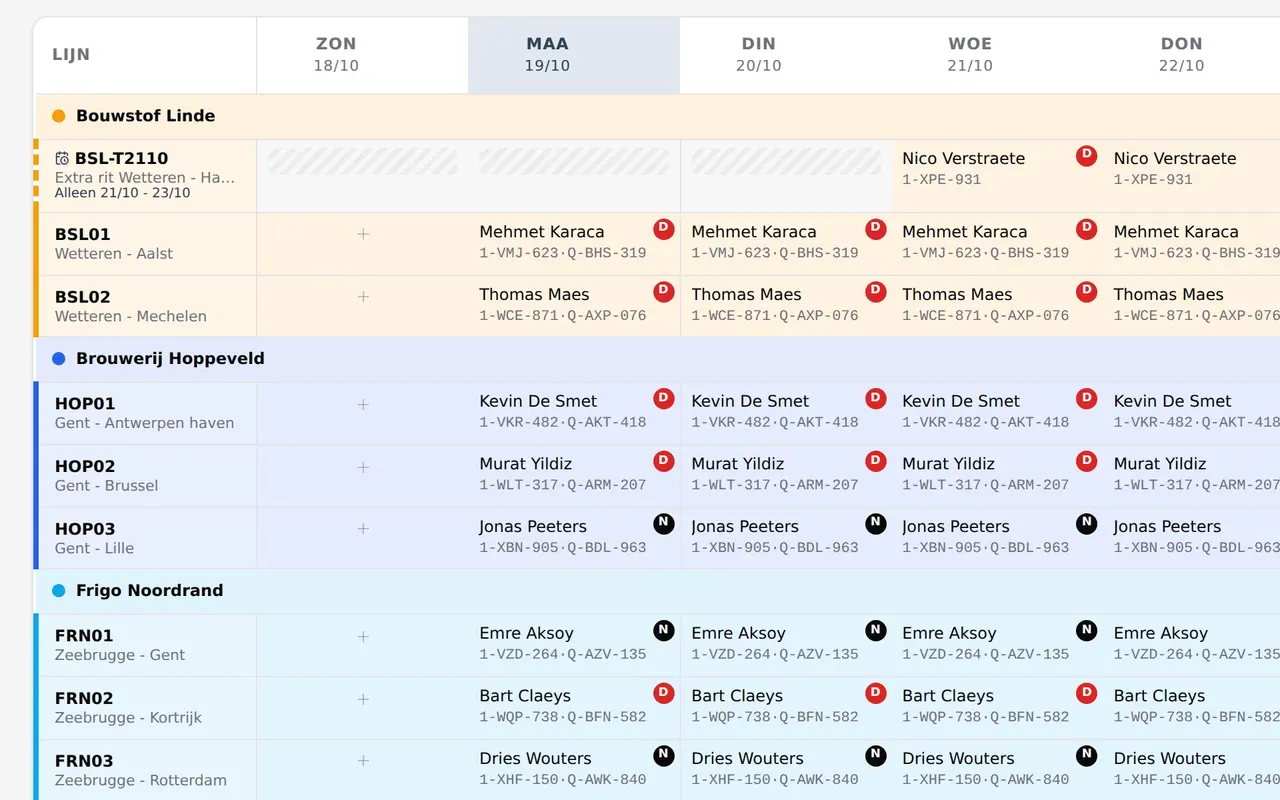
Planning
A weekly board that shows conflicts before they become a problem.
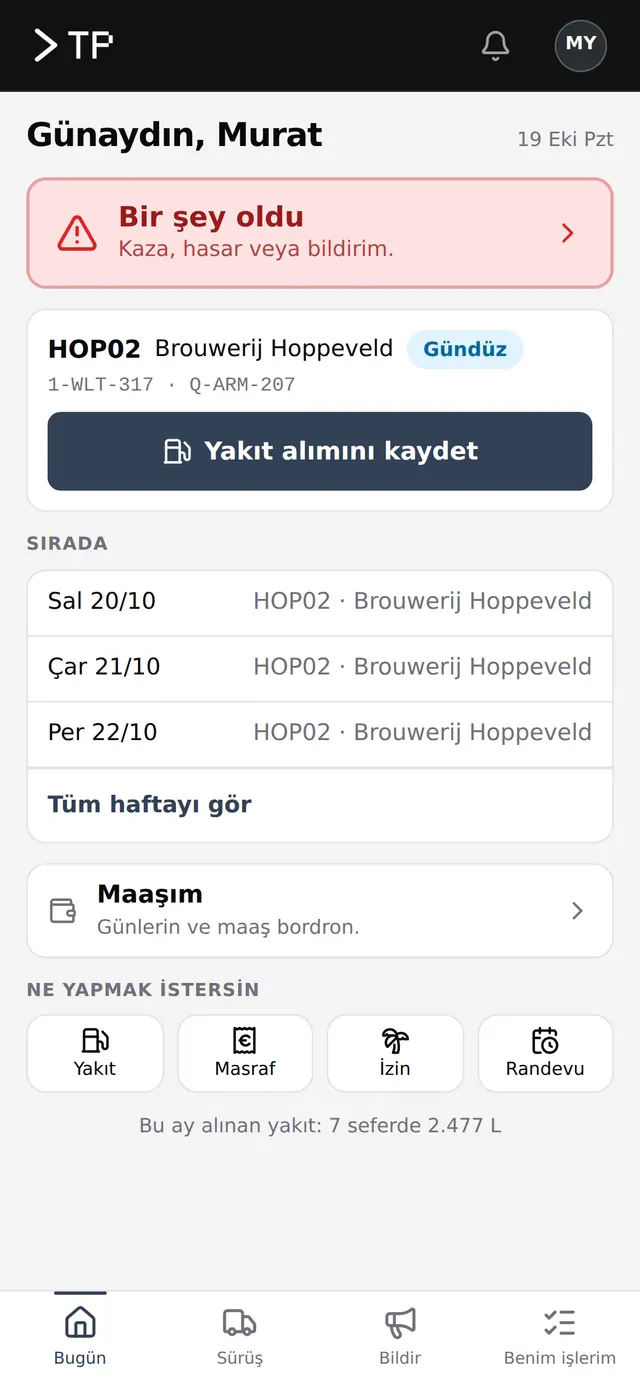
Apps for your staff
Leave, receipts or damage reported from the phone, in each person's own language.
Custom software
How VBS takes on your software project
We start from the task that costs you most time, show a first screen on a test link with your own data within weeks, and build on module by module, in English. We host in the EU with a nightly backup, and a new version goes live in 2 to 6 seconds with a way back. The DA Logistics transport platform runs every day with more than 1,300 automated tests; Zuco Logistics went live on the same core in 57 minutes. The rest of our approach: custom software and web application development. Book a call.
For a team in the capital that needs a tool in three languages, read software development in Brussels.
Custom software built in Ghent?
Tell us which task costs your team most time. We reply within 24 hours with how we would start.
Rather get in touch right away?