On this page
How to get more plumbing work you actually want
Most plumbers who ask how to get more plumbing work are not short of phone calls. They are short of the right ones: the boiler servicing contract that comes back every year, the landlord with eight flats, the bathroom booked three months ahead. What fills the diary instead is the one-off job at a bad price, half an hour from the van.
So the first step in how to get more work as a plumber is choosing. Which work do you want more of, in which towns, and which work would you happily do less of? Every step below works better when that answer is clear. The steps are honest about cost and speed: some pay this week, some take months, and none of them is a trick.
Where plumbing jobs come from, and how fast each one pays
The usual channels for a small UK plumbing firm, side by side.
- Google profile and the map
- How fast it brings workWeeks, once the profile is complete and reviews come in
- What keeps it goingPhotos, answers to reviews, posts; ten minutes a week
- Landlords and letting agents
- How fast it brings workA few months to win the first, then every year
- What keeps it goingBooking every check on time and sending records without being asked
- Boiler servicing contracts
- How fast it brings workSlow to build, steady once built
- What keeps it goingA reminder before each service and a slot that suits the customer
- Search ads
- How fast it brings workThe day the budget goes on
- What keeps it goingBudget every month, and pages that turn clicks into calls
- Local Services Ads
- How fast it brings workFast, where Google offers them
- What keeps it goingPaying per lead and answering quickly
- Your own website
- How fast it brings workMonths for search, at once for people who already know your name
- What keeps it goingPages per job and town, kept up to date
Ads fill this week. The map, landlords and contracts fill next year. A small firm does best running both.
Landlord gas safety checks: work that comes back every year
A landlord has to have the gas appliances in a rented home safety checked every 12 months, by a Gas Safe registered engineer. That makes landlords the most reliable repeat customers a plumbing and heating firm can have: the work is required, the date is known, and a landlord with one good engineer rarely shops around.
What landlords want from you follows straight from the rules.
| What the landlord has to do | What wins you the work |
|---|---|
| A gas safety check within 12 months of the last one | You book the next check before they think of it |
| A copy of the record to each tenant within 28 days, and to new tenants before they move in | You send the record to the tenants on the landlord's behalf |
| Keep each record for 2 years | Every record is in one place per property, ready when asked |
| Book up to 2 months early without losing the original expiry date | You use that window to plan checks into quiet days |
Start with the landlords you already work for. Ask how many properties they have, and offer to take all of them onto one schedule. Then ask letting agents in your towns who handles their gas checks; many manage dozens of properties and want one firm that never misses a date. A page on your site for landlord gas safety checks, per town, helps the ones who search. Landlords search for a "gas safety certificate"; the official name is a gas safety record, so use both.
Boiler servicing contracts fill the quiet months
Every boiler you fit or repair is a customer you could see again next year. Most firms lose them because nobody reminds them. A simple list of every boiler you touched, with the date and the customer's number, is worth more than any advert.
Turn that list into contracts. Offer a yearly service at a fixed price, with a reminder a few weeks before and a slot the customer can pick. Book services into the months when call-outs are quieter, so your engineers are not idle in spring and stretched in January. Put the service on the job sheet as a line the engineer can tick, so it is offered on every boiler job and not only when someone remembers.
The hard part is not selling the contract, it is running it: hundreds of dates, reminders and rebookings. A spreadsheet works for fifty. Past that, a work order app that books the next visit when the engineer closes the current one does the remembering for you. That is the step from more leads to more work for your plumbing business without more office hours.
A landlord's search that ends in three bookings
New request
Three flats, gas safety records run out in March, one visit if possible
Mark, landlord, Portishead, today 21:40
- A page per service and per town you cover
- A Google profile with photos of real jobs
- A form that asks for a photo and the address
Example with made-up businesses and reviews.
Emergency call-outs: be the number that answers
Emergency work goes to whoever answers first. A burst pipe at 9 pm does not leave a voicemail; it rings the next firm on the map. Three things decide whether that is you.
A number that is easy to reach
Your phone number at the top of every emergency page, tappable on a phone, and the hours you really answer. If you cannot answer, a missed call should get a text back within a minute with a link to send a photo and an address.
Ads that still work after February 2027
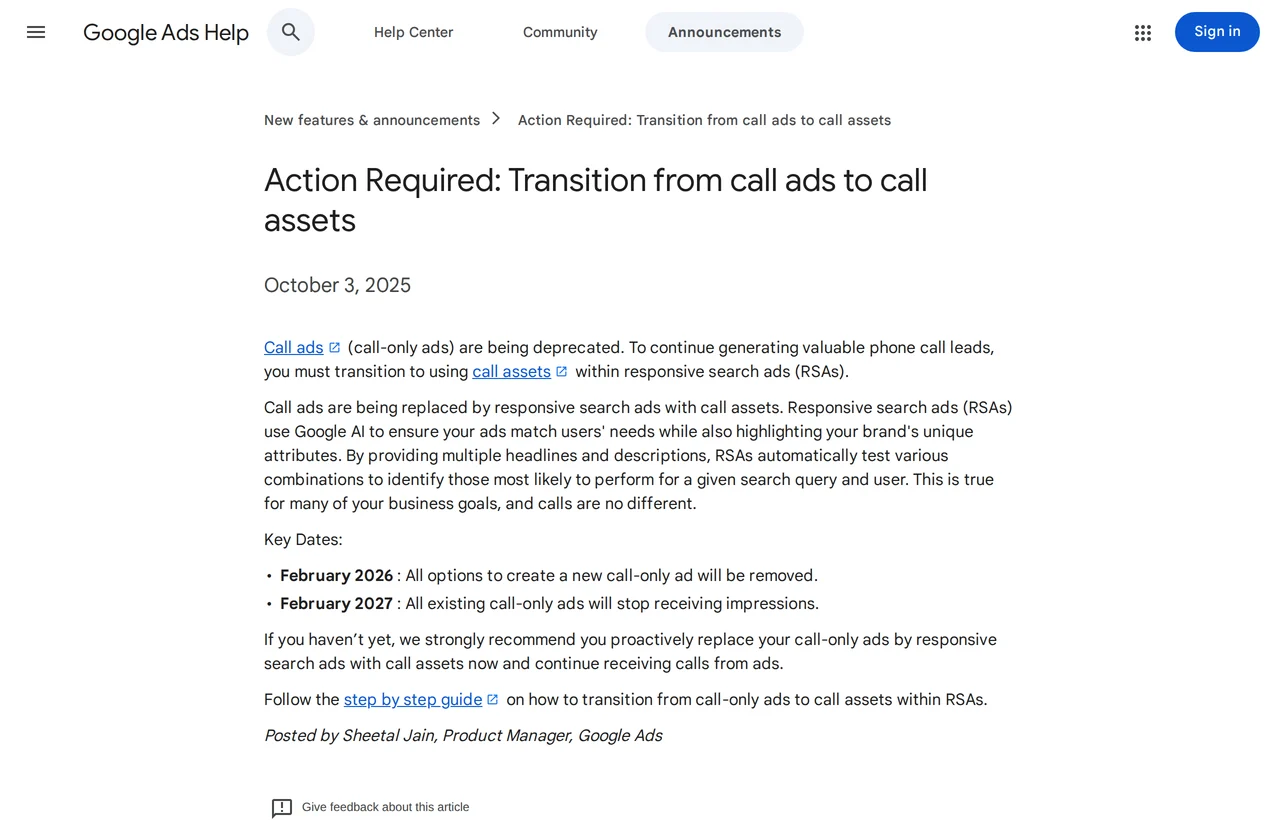
Many plumbers used Google's call-only ads for emergency work: an ad that is only a phone number. Google has removed the option to create new ones and says existing call-only ads stop receiving impressions in February 2027. The replacement is a responsive search ad with call assets, which shows the number under a normal ad. If you still run call-only ads, move them before they stop. How search ads work for a local firm is in how Google Ads works for local businesses, and what to budget in Google Ads cost.
A page that matches the ad
An ad for "emergency plumber clevedon" should land on a page about emergencies in Clevedon, not on your homepage. See landing page design.
Google Local Services Ads, where they are offered
Local Services Ads are a different kind of Google ad. They sit above the normal results, show a Google Verified badge after Google screens the business, and you pay for leads (a call, a message or a booking) rather than for clicks. Plumbers and HVAC are among the categories.
Two cautions. First, availability depends on the region and the category, so check Google's eligibility for your area before planning around them. Second, a lead you pay for is only worth something if you answer it quickly; the same rule as emergency calls applies.
If they are available to you, they are worth testing next to your own profile and site, not instead of them. Whether to put money into ads or into search first is weighed up in SEO or Google Ads.
Your Google profile and reviews in one afternoon
The free part, and for most plumbing firms the part that brings the most calls.
- Claim and complete the profileName, service area, hours, phone, and every service you offer. Follow create a Google Business Profile step by step.
- Pick the right categoriesOne primary category that matches the work you want most, and secondary ones for the rest. See Google Business Profile categories.
- Add photos of real jobsA finished bathroom, a new boiler on the wall, your van in a street people know. Add a few every month.
- Ask every customer, at the end of every jobA direct link in the message with the invoice or the gas safety record. Make it with the review link generator, and read how to get more Google reviews for wording that stays within Google's rules.
- Answer every reviewA short, specific reply to each one, good or bad. Customers read the answers as much as the reviews.
A website with a page for each job and town
The map gets you the call from people who search a plumber near them. Your website wins the ones who look a little longer: landlords comparing firms, owners planning a bathroom, anyone who wants to see real work before they ring.
What matters is a page for each job you want more of (landlord gas safety checks, boiler servicing, bathrooms, blocked drains, emergencies) and for each town you really cover, written from your own jobs. A form that asks for an address, a photo and a preferred time saves a call back. We build websites from 1,500 euro; what goes into a site for a plumbing firm is set out in web design for plumbers, and how those pages climb in your towns in SEO for plumbers.
If you have no site at all, start small: one good page per service and one per main town beats a big site with copied text. What drives the price of a site in general is in website cost.
Answer fast without living on the phone
More enquiries only help if they turn into booked jobs. Most plumbing firms lose work in the gap between the enquiry and the reply, not in the search.
| Moment | What often happens | What wins the job |
|---|---|---|
| A call while you are under a sink | Voicemail, then the customer rings someone else | A text back within a minute with a link for a photo and an address |
| A form at 10 pm | A reply the next afternoon | An automatic reply that says when you will call, and a first answer in the morning |
| Photos of an old boiler | A visit just to look | A first quote from the photos, checked by you, sent the same day |
| A landlord with several properties | A string of emails about dates | One booking for all properties, with the records sent to tenants |
AI can do part of this: sort messages so emergencies come first, and draft a first quote from photos for you to check. The detail is in AI for plumbers, the AI quote generator and AI customer service. A clean quote template is a good start even without AI.
When the problem is capacity, not leads
At some point the honest answer to how to get more plumbing jobs is that you already have them, but the firm cannot handle more. Job sheets get retyped on Friday, landlord dates live in one person's head, and every emergency breaks the week's plan.
That is when software pays off before marketing does: job sheets on the phone that become invoices, a planning board that makes room for a call-out and moves the right job, and gas safety checks and services that book themselves. We set out what that looks like for a team of five, with a worked example in pounds, on software for plumbers. Electrical firms face the same choices; their version is how to get more electrical work.
More plumbing jobs: what plumbers ask next
What is the fastest way to get more plumbing work this week?
Ring your past customers whose boilers are due a service, and ask your landlords whether all their properties are on your schedule. After that, search ads bring calls the day they go on, but they cost money every month.
Are lead directories worth paying for?
They can bring work, especially when you start. But the profile and its reviews stay on their site, and the lead may also go to other firms. Use them alongside your own Google profile and site, not instead of them.
How do I get more work for my plumbing business from landlords?
Make their legal duties easy: book every check within 12 months, send the record to tenants within 28 days, and keep two years of records per property. Then ask for all their properties, and approach letting agents in your towns.
Do I need a Gas Safe registration for boiler servicing?
Any work on a gas appliance has to be done by a Gas Safe registered engineer. Show your registration on your site and profile; customers and landlords look for it.