Google Ads for dental clinics
Google Ads for dentists that stay inside the rules
New patients search for a dentist near them, for an emergency or for a treatment. We build ads that answer them and that a regulator can read without frowning.
Patients search, and the rules read along.
People look for a dentist when they move, when their dentist stops taking NHS patients, when a tooth hurts or when they want a treatment such as aligners or implants. Google Ads puts your clinic at the top of those searches.
Dentistry is regulated advertising. The GDC, the ASA and Google itself each have rules on what you may say and whom you may target. A campaign that ignores them gets ads rejected at best and a complaint at worst. This page shows how we build campaigns that bring bookings and pass those rules.
What the GDC expects from an ad
The GDC asks that every advert is legal, decent, honest and truthful, and gives a checklist. The points that matter most in a search ad:
| GDC point | What it means in an ad |
|---|---|
| No "specialist" unless on a GDC specialist list | "Orthodontist" or "implant specialist" only for listed dentists |
| No unjustified expectations | no "perfect smile" or "pain-free" as a promise |
| NHS, mixed or private made clear | say it on the landing page, ideally in the ad |
| GDC number shown | on the site, for every dentist named |
| Claims backed by facts | prices and waiting times must be real and current |
The ASA's CAP Code adds rules for health claims, and before-and-after images in ads need care: they must be real, typical and not edited. Treatments such as facial aesthetics that use prescription-only medicines may not be advertised to the public at all.
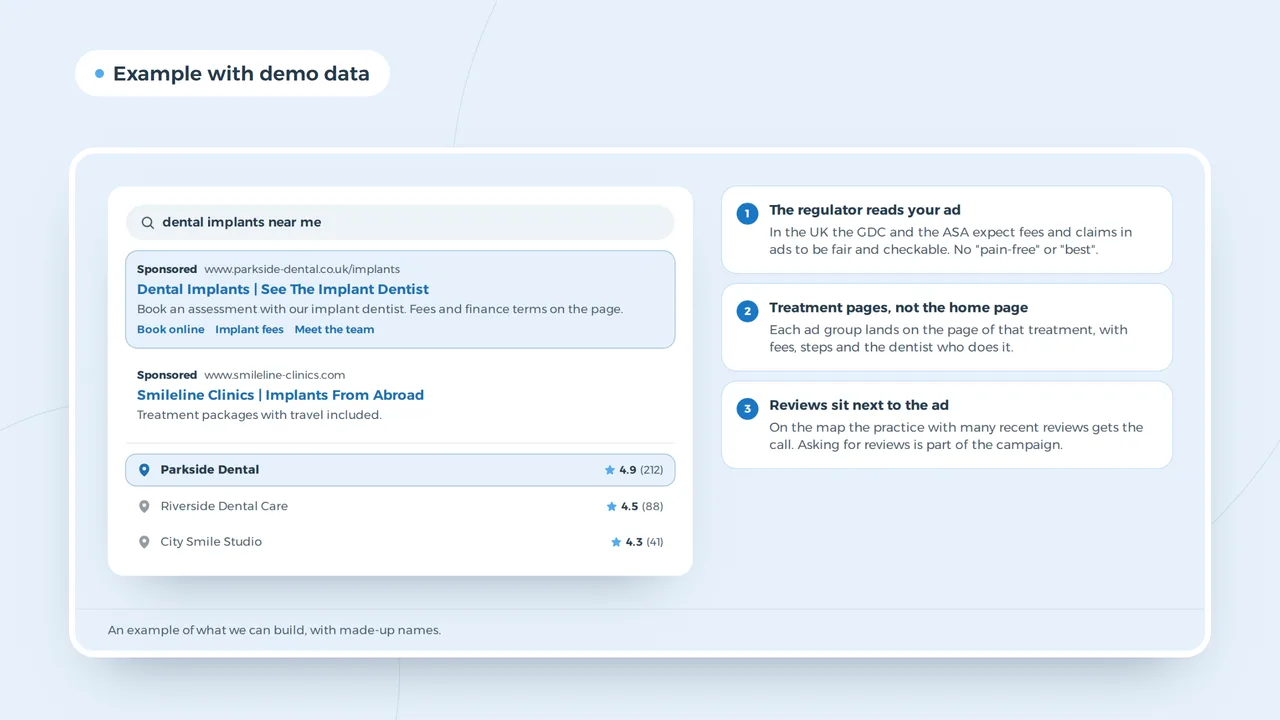
A clinic ad that gives practice information, not promises
- The regulator reads your adIn the UK the GDC and the ASA expect fees and claims in ads to be fair and checkable. No "pain-free" or "best".
- Treatment pages, not the home pageEach ad group lands on the page of that treatment, with fees, steps and the dentist who does it.
- Reviews sit next to the adOn the map the practice with many recent reviews gets the call. Asking for reviews is part of the campaign.
An example of what we can build, with made-up names.
Google's own health rules
Google restricts some health ads and does not allow personalised advertising based on health. That means no remarketing list of people who visited your implant page, and no audience built on dental conditions. You can still target by location, search words and time of day, which for a dental clinic is most of what matters. Google may also ask you to complete advertiser verification; health is one of the areas where it comes early.
Campaigns that fit a clinic
| Campaign | Example searches | What the ad offers | Result |
|---|---|---|---|
| New patients | dentist taking new patients near me | the next available slot, NHS or private | a booking |
| Emergency | emergency dentist today | same-day slots, phone number | a call |
| Treatments | invisible braces cost, dental implants | a consultation, price from if published | a consultation request |
| Hygiene | dental hygienist near me | direct access, online booking | a booking |
Each campaign gets its own page. A treatment page needs a clear price range if you publish one, the dentist who does it with their GDC number and what happens at the first visit. An emergency page needs a number and opening hours above the fold.
Areas and hours
Most patients travel only a few miles to a dentist. Set the location option to presence, draw a tight radius, and run emergency ads only when someone answers the phone or online booking shows a real slot. Treatment campaigns can reach further, because people travel for implants or aligners.
What to measure
Count online bookings, calls longer than a minute and consultation requests as conversions, each with its own goal in Google Analytics 4. Keep the tracking free of health data: an event called "booking" is fine, an event that carries the treatment and the patient's name is not. Set it up with consent; the cookie scanner shows what fires before someone agrees.
Ad texts that pass
Write about the clinic, not about the reader: "New NHS and private patients welcome in Leeds" works; "Embarrassed by your teeth?" does not, and Meta rejects that pattern too. Test your headlines in the responsive search ad preview, and read Google Ads examples for patterns by sector.
Next to SEO
Ads bring patients while you pay. A site that ranks for "dentist + town" and a Google Business Profile with reviews bring them for years. Most clinics do both: ads for treatments with high value and for the first months, SEO for the steady flow. See dental SEO. The Google Ads cost guide explains what a click costs.
Treatment pages that convert and comply
A click on an implant or aligner ad lands on a page that must do two things at once: help the patient decide and stay inside the rules. The pages that work have the same parts.
| Part | What it holds | Why |
|---|---|---|
| The treatment in plain words | what it is, who it suits, how long it takes | patients compare clinics on clarity |
| Price from, if published | what it includes, finance if offered | a real price avoids a wasted visit |
| The dentist | name, qualification, GDC number | GDC checklist |
| Risks and alternatives | short and honest | no unjustified expectations |
| Booking | a form or online booking at the top and the bottom | the conversion you measure |
Build it as a landing page per treatment rather than one page for everything, and link it from your Google Business Profile and your reviews. A practice with more Google reviews gets more out of every ad click, because people check the stars before they book.
Budget and the first three months
Start with new patients and emergencies, which bring bookings quickly and show what a booking costs. Add treatment campaigns once the measurement works, because they cost more per click and take longer to turn into patients. The Google Ads budget calculator shows how many clicks a monthly budget buys at your cost per click. Review search terms every week in the first month and every two weeks after, and add negatives for job seekers ("dental nurse jobs"), students and DIY searches.
Facebook and Instagram next to Google
Search catches people who already need a dentist. Facebook and Instagram reach people nearby before they search, for example when a new practice opens or when you start taking NHS patients again. The same rules apply: no ads that suggest you know someone's dental condition, no before-and-after images that are edited or untypical, and Meta's own health policy on top. Meta does not allow targeting on health interests either, so you target by area and age. See Facebook ads for local businesses for the setup and the Facebook ad preview to test a post before it runs. For the choice between the two channels, read Meta ads or Google Ads.
Questions from dental clinics
- Can a dental clinic use remarketing?
- Not based on health. Google does not allow remarketing lists built on health interests, and treatment pages count. Target by search and location instead.
- May I show prices in the ad?
- Yes, if they are real, current and on the landing page, with what the price includes.
Google Ads
How VBS builds dental campaigns
We write the ads against the GDC checklist and the ASA rules before they go live, keep health out of targeting and tracking, and measure bookings from the first day. For Park & Wash we set up the Meta pixel behind consent with Contact and Lead events; for a clinic the events stay just as plain. Campaign management is part of our Google Ads service. For booking and practice software, see dental practices.
New patients without a regulator's frown?
Send us your current ads or your site. We check them against the rules and tell you what to change first.
Rather get in touch right away?